
DbcultAccessing Vault...
Director's Spotlight
Senior Film Conservator
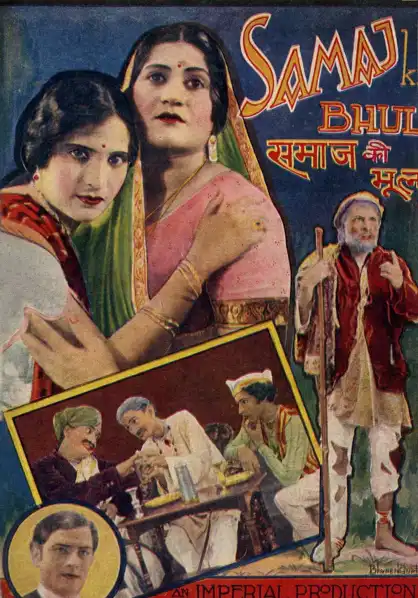
Director's Spotlight: India
A Deep Dive into the 1934 Vision of Homi Master
Peeling back the layers of Homi Master's Samaj Ki Bhul exposes the technical innovation that Homi Master introduced to the cult format. Driven by an uncompromising commitment to cult excellence, it stands as the definitive 1934 statement on cult identity.
In Samaj Ki Bhul, Homi Master pushes the boundaries of conventional narrative. The film's unique approach to its subject matter has sparked endless debates and interpretations among cinephiles and critics alike.
The visual language of Samaj Ki Bhul is defined by its use of shadows and framing, a hallmark of Homi Master's style. By utilizing a 1934-era palette, the film creates an immersive experience that perfectly complements its cult themes.
| Cinematography | Noir-Inspired |
| Soundtrack | Synth-Heavy |
| Editing | Rhythmic |
| Art Direction | Naturalist |
Visualizing the convergence of Homi Master's style and the core cult narrative.
Unusually violent film for its time advocating widow's right to remarry. The crooked Daulatram (Jamsehdji) sells his daughter Chandramukhi (Dulari) in marriage to Banwarlal. Distraught, her mother commits suicide. Banwarlal is poisoned by his nephew who fears the new wife might produce an heir, and Chandramukhi is forced into prostitution. Her father, now a beggar, chances to see his daughter in this condition and he too commits suicide. The nephew then kills Chandramukhi's brother Dayaram (Kader) in an argument and Chandramukhi is arrested for murder. The sorry tale ends happily when the good lawyer Raghuvir (Ghaznavi), Charamukhi's original suitor, rescues her in court. The film ends with debates for and against widow remarriage and with Raghuvir marrying Chandramukhi.
Decades after its release, Samaj Ki Bhul remains a vital piece of the cinematic puzzle. Its influence can be seen in countless modern works, solidifying Homi Master's status as a master of the craft in India and beyond.