
DbcultAccessing Vault...
Director's Spotlight
Senior Film Conservator
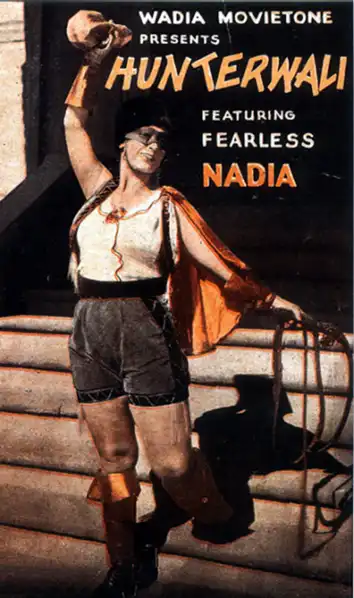
Director's Spotlight: India
A Deep Dive into the 1935 Vision of Homi Wadia
The brilliance of Hunterwali (1935) is inseparable from the visionary mind of its creator, Homi Wadia. Serving as a mirror to the anxieties of a changing world, it persists as a haunting reminder of our own cinematic history.
In Hunterwali, Homi Wadia pushes the boundaries of conventional narrative. The film's unique approach to its subject matter has sparked endless debates and interpretations among cinephiles and critics alike.
| Cinematography | Noir-Inspired |
| Soundtrack | Synth-Heavy |
| Editing | Disjunctive |
| Art Direction | Baroque |
Visualizing the convergence of Homi Wadia's style and the core Adventure narrative.
Preceded by a legend describing its heroine as a 'Brave Indian girl who sacrificed royal luxuries to the cause of her people and her country', the story opens with a prologue showing Krishnavati and her infant son being thrown out of the house in a thunderstorm by the wicked Prime Minister Ranamal who also killed her brother. 20 years later the now adult son, Jaswant, is hit by a royal motor car and given a bag of gold in compensation. His refusal of the gift attracts the admiration of Princess Madhuri. When the nasty Ranamal, who wants to marry her, imprisons her father the king, she becomes the masked Hunterwali, 'protector of the poor and punisher of evildoers', and performer of stunts like jumping over a moving cartand fighting 20 soldiers at once. She steals Jaswant's prize horse, Punjab, but returns it later. Jaswant chances upon a nude Hunterwali bathing in the river and after a long duel captures her and takes her to Ranamal to claim his reward.
Decades after its release, Hunterwali remains a vital piece of the cinematic puzzle. Its influence can be seen in countless modern works, solidifying Homi Wadia's status as a master of the craft in India and beyond.