
DbcultAccessing Vault...
Director's Spotlight
Senior Film Conservator
Director's Spotlight: India
A Deep Dive into the 1936 Vision of Homi Wadia
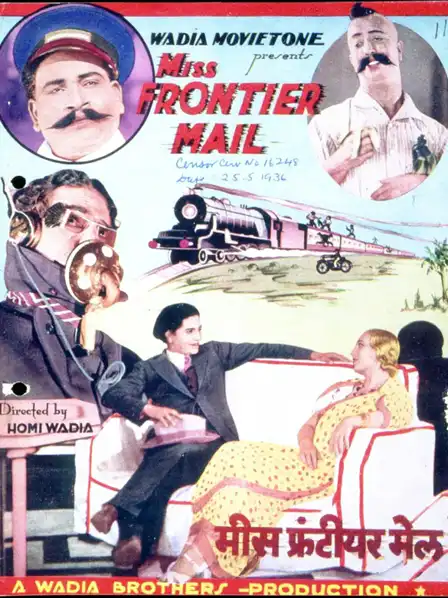
Exploring the Drama underpinnings of Miss Frontier Mail leads us to the uncompromising vision of Homi Wadia that defines this Drama masterpiece. Melding the raw energy of India with a global Drama appeal, it echoes the profound changes occurring in India during that era.
In Miss Frontier Mail, Homi Wadia pushes the boundaries of conventional narrative. The film's unique approach to its subject matter has sparked endless debates and interpretations among cinephiles and critics alike.
The visual language of Miss Frontier Mail is defined by its use of shadows and framing, a hallmark of Homi Wadia's style. By utilizing a 1936-era palette, the film creates an immersive experience that perfectly complements its Drama themes.
| Cinematography | High-Contrast |
| Soundtrack | Experimental |
| Editing | Invisible |
| Art Direction | Kitsch |
Visualizing the convergence of Homi Wadia's style and the core Drama narrative.
Savita, aka Miss 1936, is an amateur hunter while her brother Jayant is an amateur film-maker. Their father, Maganlal, arrested for the murder of a station-master, is defended by their uncle Shyamlal, who is in fact the mysterious Signal X. Shyamlal causes a major train smash-up so as to promote his new airline. He then implicates hero Sundar, son of the railway president, in the crime. Savita overcomes the nasty Signal X, whose henchmen are caught on film by Jayant as they sabotage a bridge. Nadia indulges in extensive fist-fights, set to heavy sound effects, and a famous battle alongside Sundar atop a moving train.
Decades after its release, Miss Frontier Mail remains a vital piece of the cinematic puzzle. Its influence can be seen in countless modern works, solidifying Homi Wadia's status as a master of the craft in India and beyond.