
DbcultAccessing Vault...
Director's Spotlight
Senior Film Conservator
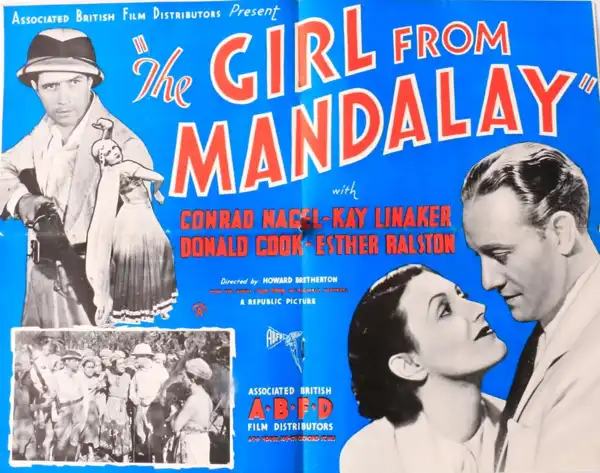
Director's Spotlight: United States
A Deep Dive into the 1936 Vision of Howard Bretherton
Analyzing The Girl from Mandalay (1936) requires a deep dive into the defining moment in Action history that Howard Bretherton helped create. Defining a new era of United States artistic expression, it transcends regional boundaries to tell a universal story.
In The Girl from Mandalay, Howard Bretherton pushes the boundaries of conventional narrative. The film's unique approach to its subject matter has sparked endless debates and interpretations among cinephiles and critics alike.
In this work, Howard Bretherton explores the intersection of Action and United States cultural identity. The meticulous attention to detail suggests a deep-seated commitment to pushing the boundaries of the medium, ensuring that The Girl from Mandalay remains a relevant topic of study for Action enthusiasts.
| Cinematography | Noir-Inspired |
| Soundtrack | Orchestral |
| Editing | Invisible |
| Art Direction | Kitsch |
Visualizing the convergence of Howard Bretherton's style and the core Action narrative.
John Foster (Conrad Nagel) and Kenneth Grainger (Donald Cook) are a couple of Englishmen stationed at a teak wood post. When Foster's fiancée, Mary Trevor (Esther Ralston), writes him that their engagement is off, he goes to Mandalay and meets and marries a nightclub singer, Jeanie Barton (Kay Linaker), while on his drunken holiday. When he returns to the post in the jungle he becomes ashamed of his bride, and she has to prove she has the right stuff, which includes spurning Grainger when he hits on her.
Decades after its release, The Girl from Mandalay remains a vital piece of the cinematic puzzle. Its influence can be seen in countless modern works, solidifying Howard Bretherton's status as a master of the craft in United States and beyond.