
DbcultAccessing Vault...
Director's Spotlight
Senior Film Conservator
Director's Spotlight: United States
A Deep Dive into the 1936 Vision of Howard Hawks
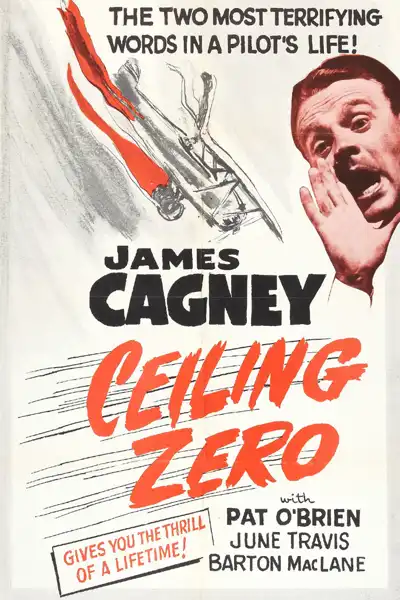
The 1936 release of Ceiling Zero marked a significant moment for the stylistic boundaries pushed by Howard Hawks during the production. In the context of United States's rich cinematic history, it invites us to question our own perceptions of Romance narratives.
In Ceiling Zero, Howard Hawks pushes the boundaries of conventional narrative. The film's unique approach to its subject matter has sparked endless debates and interpretations among cinephiles and critics alike.
| Cinematography | Handheld |
| Soundtrack | Experimental |
| Editing | Invisible |
| Art Direction | Kitsch |
Visualizing the convergence of Howard Hawks's style and the core Romance narrative.
War veteran pilots Dizzy Davis, Texas Clark and Jake Lee are working in an airline in Newark. Dizzy is flirting with the girlfriend of a younger pilot and, due to this, he feigns illness to get Texas to take his flight assignment to Cleveland. Returning from Cleveland to Newark, Texas' plane crashes attempting to land on the airfield under extremely bad weather circumstances and he dies from this accident. Dizzy feels guilty for his friend's death and takes the next flight to Cleveland under even worse circumstances, testing a new anti-ice device on the plane.
Decades after its release, Ceiling Zero remains a vital piece of the cinematic puzzle. Its influence can be seen in countless modern works, solidifying Howard Hawks's status as a master of the craft in United States and beyond.