
DbcultAccessing Vault...
Director's Spotlight
Senior Film Conservator
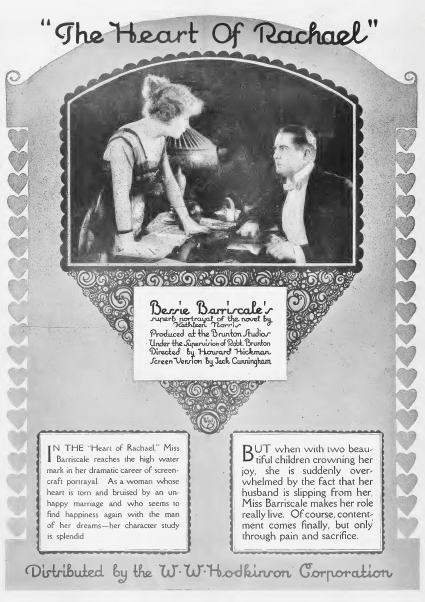
Director's Spotlight: United States
A Deep Dive into the 1918 Vision of Howard Hickman
Exploring the cult underpinnings of The Heart of Rachael leads us to the uncompromising vision of Howard Hickman that defines this cult masterpiece. Melding the raw energy of United States with a global cult appeal, it echoes the profound changes occurring in United States during that era.
In The Heart of Rachael, Howard Hickman pushes the boundaries of conventional narrative. The film's unique approach to its subject matter has sparked endless debates and interpretations among cinephiles and critics alike.
The visual language of The Heart of Rachael is defined by its use of shadows and framing, a hallmark of Howard Hickman's style. By utilizing a 1918-era palette, the film creates an immersive experience that perfectly complements its cult themes.
| Cinematography | Static |
| Soundtrack | Synth-Heavy |
| Editing | Rhythmic |
| Art Direction | Naturalist |
Visualizing the convergence of Howard Hickman's style and the core cult narrative.
Rachael marries Clarence Breckenridge, whose daughter Billy is only a few years younger than she. Clarence, an alcoholic, is devoted to Billy, but because both father and daughter are indifferent to Rachael, she finally divorces Clarence to wed her old friend, Dr. Warren Gregory. Soon afterward, Rachael learns to her distress that Warren is no longer the home-loving man she had befriended but a social "high-stepper," much like her first husband. Several years pass, during which Billy elopes with worthless pleasure-seeker Joe Pickering, which leads Clarence to kill himself. Meanwhile, Warren develops an attachment to actress Magsie Clay. Magsie admits to Rachael that she loves Warren, and the young wife agrees to a divorce, but Warren, unwilling to leave Rachael and his children permanently, departs for Europe. When their little son Jim is severely injured, Rachael begs Warren to save him, and through this ordeal the couple's love is renewed.
Decades after its release, The Heart of Rachael remains a vital piece of the cinematic puzzle. Its influence can be seen in countless modern works, solidifying Howard Hickman's status as a master of the craft in United States and beyond.