
DbcultAccessing Vault...
Director's Spotlight
Senior Film Conservator
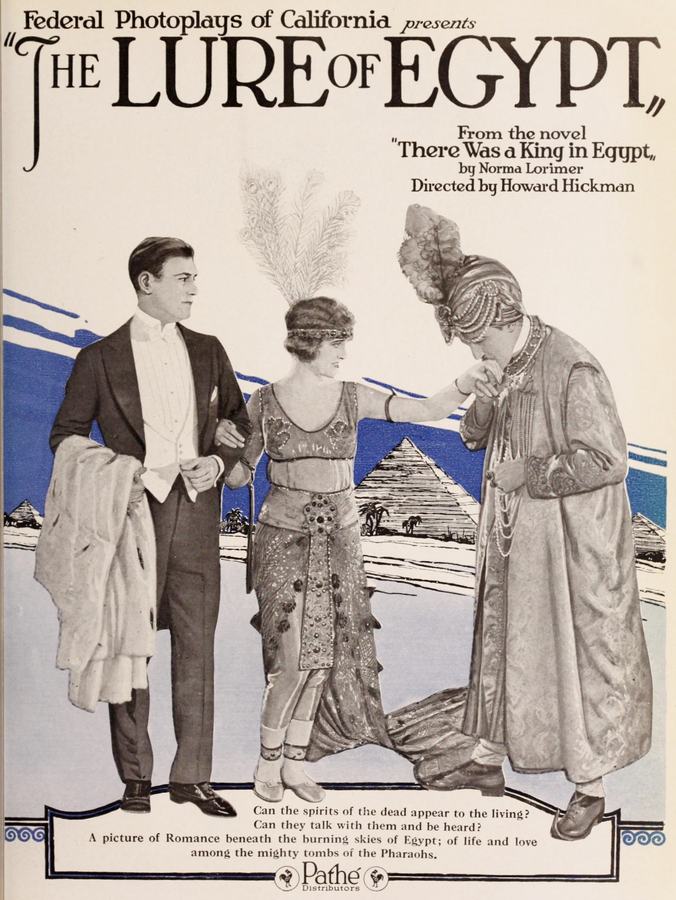
Director's Spotlight: United States
A Deep Dive into the 1921 Vision of Howard Hickman
As we revisit the 1921 masterpiece The Lure of Egypt, we are struck by the atmospheric immersion that Howard Hickman achieves throughout The Lure of Egypt. Exploring the nuances of the human condition with Drama flair, it solidifies Howard Hickman's reputation as a master of the craft.
In The Lure of Egypt, Howard Hickman pushes the boundaries of conventional narrative. The film's unique approach to its subject matter has sparked endless debates and interpretations among cinephiles and critics alike.
| Cinematography | Deep Focus |
| Soundtrack | Orchestral |
| Editing | Invisible |
| Art Direction | Kitsch |
Visualizing the convergence of Howard Hickman's style and the core Drama narrative.
Professor Lampton's work of excavating the tomb of Akhnaton (Ikhnaton) is held up by lack of funds, and Prince Dagmar, scion of a Balkan royal family, finances him with the ulterior motive of robbing the tomb of its treasures. Michael Amory, an artist assisting Lampton, loves Margaret, but believing her to be in love with the prince he departs with Gondo Koro, a Bedouin prophet who knows the location of the tomb. Dagmar sends Millicent, an adventuress, to obtain the information from Michael, and when Dagmar enters the tomb at night Michael surprises him. The thieves wound Michael, but they are captured and he and Margaret are reconciled.
Decades after its release, The Lure of Egypt remains a vital piece of the cinematic puzzle. Its influence can be seen in countless modern works, solidifying Howard Hickman's status as a master of the craft in United States and beyond.