
DbcultAccessing Vault...
Director's Spotlight
Senior Film Conservator

Director's Spotlight: United States
A Deep Dive into the 1921 Vision of Howard M. Mitchell
In the grand tapestry of Drama cinema, The Mother Heart serves as a bridge between the philosophical inquiries that Howard M. Mitchell embeds within the narrative. Melding the raw energy of United States with a global Drama appeal, it invites us to question our own perceptions of Drama narratives.
In The Mother Heart, Howard M. Mitchell pushes the boundaries of conventional narrative. The film's unique approach to its subject matter has sparked endless debates and interpretations among cinephiles and critics alike.
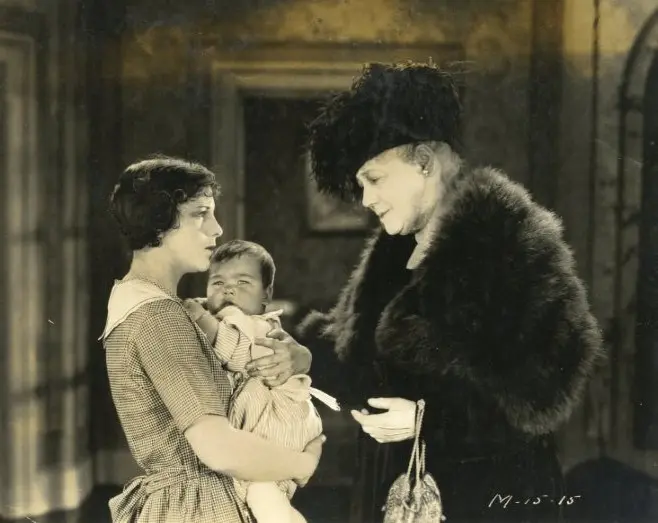
To fully appreciate The Mother Heart, one must consider the cinematic climate of 1921. During this period, United States was undergoing significant artistic shifts, and Howard M. Mitchell was at the forefront of this Drama movement, often challenging established norms.
| Cinematography | Handheld |
| Soundtrack | Diegetic |
| Editing | Elliptical |
| Art Direction | Expressionist |
Visualizing the convergence of Howard M. Mitchell's style and the core Drama narrative.
Forced to theft when in dire straits, family man John Howard is arrested for stealing food from a grocery store and is put in jail. The shock kills his wife, and his children are sent to an orphanage. Ella is adopted by a wealthy widow, and May finds a place on the farm of George Stuart, where she attracts the attentions of farmhand Billy Bender. Clifford Hamilton, manager of Stuart's grocery stores, calls at the farm with some papers and comes to know May and later her sister, who has been named heir to the widow. After firing the manager for dishonesty, Stuart finds that Hamilton is responsible for May's father's being jailed, and he reunites Howard with his children.
Decades after its release, The Mother Heart remains a vital piece of the cinematic puzzle. Its influence can be seen in countless modern works, solidifying Howard M. Mitchell's status as a master of the craft in United States and beyond.