
DbcultAccessing Vault...
Director's Spotlight
Senior Film Conservator
Director's Spotlight: United States
A Deep Dive into the 1915 Vision of Howell Hansel
The 1915 release of Colonel Carter of Cartersville marked a significant moment for the enduring legacy of Howell Hansel's artistic contribution to the genre. By challenging the status quo of 1915 cinema, it has cemented its place in the global cult cinema archive.
In Colonel Carter of Cartersville, Howell Hansel pushes the boundaries of conventional narrative. The film's unique approach to its subject matter has sparked endless debates and interpretations among cinephiles and critics alike.
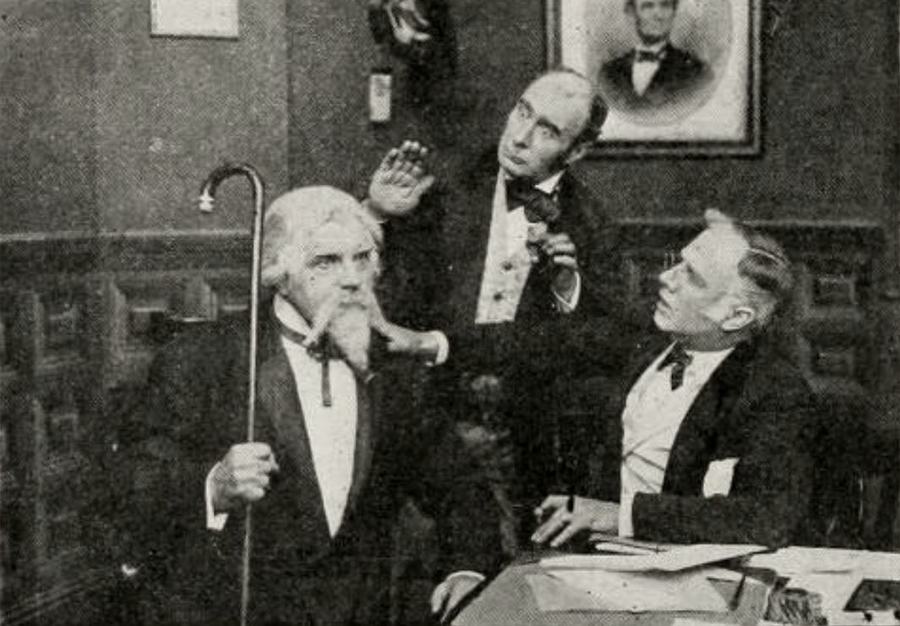
In this work, Howell Hansel explores the intersection of cult and United States cultural identity. The meticulous attention to detail suggests a deep-seated commitment to pushing the boundaries of the medium, ensuring that Colonel Carter of Cartersville remains a relevant topic of study for cult enthusiasts.
| Cinematography | Deep Focus |
| Soundtrack | Synth-Heavy |
| Editing | Disjunctive |
| Art Direction | Baroque |
Visualizing the convergence of Howell Hansel's style and the core cult narrative.
Before the Civil War, two young people contract a secret marriage. They are Nancy Carter and Robert Gill. Nancy's father has objected to Robert because of his drinking habits. Robert pledges Nancy to drink no more. While their marriage is still a secret he forces his way into the Carter drawing room at a time when it is crowded with guests and blurts out the secret that Nancy is his wife, insisting that she go with him. The next day in a repentant state of mind, Robert rides his horse beneath the window of Nancy's room and pleads for her forgiveness. She cannot forgive. He draws a pistol, fires a bullet into his own heart and drops from his horse, dead. Years later, Nancy Gill and her daughter Laura, now 16, are living at the home of Col. Carter, in Virginia, at a time when the Civil War is in its final stages. Col. Carter is in command of a Confederate regiment. He is the nephew of Nancy Gill. The two armies are forming their lines for a battle near Col. Carter's home. He leaves his command and goes home to protect it against a raiding party, which has been sent out by the northern army. The raiding party arrives before he leaves. He hides in the shrubbery near the house. The raiding party is commanded by Lieut. Tom Klutchem. Laura appeals to him to spare their home. These two young people fall in love at first sight. The home is not destroyed. Col. Carter had witnessed what has taken place between them. In the war, Lieut. Klutchem is wounded and Laura nurses him. At the end of the war. Col. Carter endeavors to persuade Mr. Klutchem, Sr., to finance a railroad scheme, and only succeeds in doing so after quarreling with him. Laura and Tom Klutchem become engaged and are married, and Col. Carter is made happy by the presentation to him by Aunt Nancy of land upon which there is coal. Then Mr. Klutchem agrees to finance the railroad.
Decades after its release, Colonel Carter of Cartersville remains a vital piece of the cinematic puzzle. Its influence can be seen in countless modern works, solidifying Howell Hansel's status as a master of the craft in United States and beyond.