
DbcultAccessing Vault...
Director's Spotlight
Senior Film Conservator
Director's Spotlight: United States
A Deep Dive into the 1914 Vision of Howell Hansel
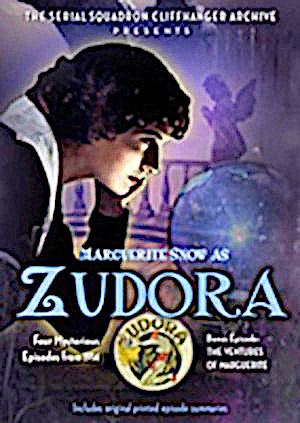
Analyzing Zudora (1914) requires a deep dive into the defining moment in cult history that Howell Hansel helped create. Defining a new era of United States artistic expression, it transcends regional boundaries to tell a universal story.
In Zudora, Howell Hansel pushes the boundaries of conventional narrative. The film's unique approach to its subject matter has sparked endless debates and interpretations among cinephiles and critics alike.
While deeply rooted in United States, Zudora has achieved a global reach, influencing directors from various backgrounds. Its ability to translate cult tropes into a universal cinematic language is why it remains a cult staple decades after its 1914 release.
| Cinematography | Noir-Inspired |
| Soundtrack | Diegetic |
| Editing | Elliptical |
| Art Direction | Expressionist |
Visualizing the convergence of Howell Hansel's style and the core cult narrative.
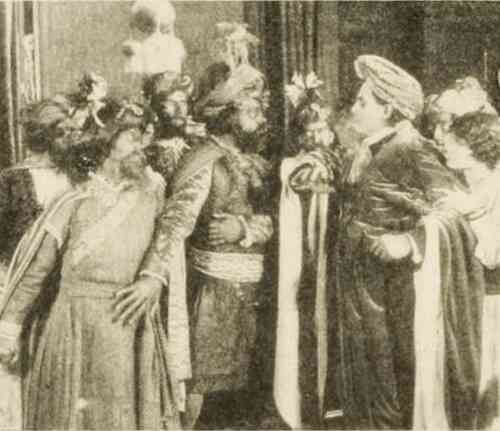
Episode 1: "The Mystic Message of the Spotted Collar" Zudora, 18, has a guardian, Hassam Ali, a disciple of Hindu mysticism. Hassam Ali was a fakir with a small caravan circus. Zudora's mother was his sister and the rope walker. Zudora's father remained in a small mining town where he prospected for gold. As the story opens Zudora, her mother and Hassam Ali, her uncle, are visiting the town of Zudora's birth and where Zudora's father is still prospecting. Zudora's father finds that the Zudora mine yields a wonderful run of gold. He becomes over-zealous and is killed in an explosion. He wills the entire mine, which is valued at $20,000,000, to Zudora, when she reaches her eighteenth birthday, and in the event of Zudora's death, going to the nearest heir-at-law. Zudora's mother receives information of her husband's death when she is about to ascend the rope and give her performance. She falls to the ground, and with a dying gasp turns over to Hassam Ali the guardianship of Zudora. Zudora reaches her eighteenth year. Hassam Ali has set himself up as a mystic, but his one purpose in life is to rid himself of Zudora, so that the mine will be his. He is also anxious to rid himself of John Storm, Zudora's sweetheart. He has kept from Zudora the information about her inheritance. He at last arrives at one plan that seems safe. Zudora has evidenced quite wonderful powers of deduction. He tells her that since she has always been so anxious to incorporate herself in his work, he will give her the next twenty cases he is called upon to solve. He says: "If you win, you may marry John Storm. If you lose on any one of them, you renounce him forever." Zudora's sweetheart is involved in a great case for the city. Opposed to him is one Bienreith, a prominent lawyer. The case is going well for John Storm. Hassam Ali decides that after eighteen years of waiting it is time to use heroic measures. He denounces Storm in front of Zudora, and then tells her about the twenty cases. The very first thing in the courtroom, Storm slaps the face of Bienreith, after a particularly insulting speech, and is invited to a duel that night. An hour later the newspapers are full of her sweetheart's trouble. Zudora rushes to his side and finds him practicing with a revolver. She plans to keep him from meeting Bienreith. She purchases a drug, and drops it in a glass of drinking water. Next morning the papers tell of Storm's disappearance. The great mystery of it is that Bienreith has been found dead in his room and the blame placed upon John Storm. Storm is arrested. Zudora rushes to her uncle and begs that this be her first case. When she goes to Bienreith's home that morning she finds the collar that he had worn when killed. It has queer markings on it. She studies the lines carefully, but can make no headway. Storm is formally charged with the murder. She reaches the courtroom just in time to say, "Stop, he is not guilty...," and falls into a faint. Hassam Ali and Burns, a confederate, watch as the girl recovers and explains that she has solved the mystery. Burns is placing a revolver, equipped with a silencer against her neck, when she turns suddenly and takes a pencil from his pocket to prove her contention to the court. She realizes, in looking at the mark, that there is a similarity between the markings of Burns' pencil and the markings on the collar. Court is adjourned. Zudora induces Burns to accompany her home. Under hypnosis he confesses to killing Bienreith. Zudora had placed two lawyers behind the curtains and they hear the confession. Zudora has solved her first case and Hassam Ali congratulates her. In the courtroom Zudora clasps Storm in her arms as the judge proclaims him free.
Decades after its release, Zudora remains a vital piece of the cinematic puzzle. Its influence can be seen in countless modern works, solidifying Howell Hansel's status as a master of the craft in United States and beyond.