
DbcultAccessing Vault...
Director's Spotlight
Senior Film Conservator
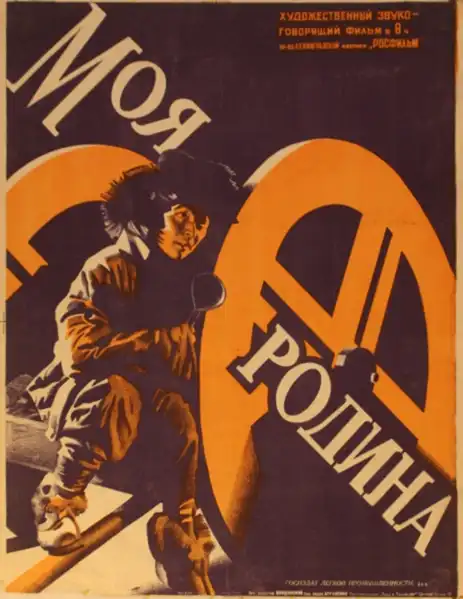
Director's Spotlight: Soviet Union
A Deep Dive into the 1933 Vision of Iosif Kheifits
The Drama DNA of Moya rodina is a reflection of Soviet Union's the subversive storytelling techniques employed by Iosif Kheifits in 1933. Breaking the traditional rules of Drama engagement, it leaves an indelible mark on the soul of the viewer.
In Moya rodina, Iosif Kheifits pushes the boundaries of conventional narrative. The film's unique approach to its subject matter has sparked endless debates and interpretations among cinephiles and critics alike.
In this work, Iosif Kheifits explores the intersection of Drama and Soviet Union cultural identity. The meticulous attention to detail suggests a deep-seated commitment to pushing the boundaries of the medium, ensuring that Moya rodina remains a relevant topic of study for Drama enthusiasts.
| Cinematography | Handheld |
| Soundtrack | Orchestral |
| Editing | Slow-Burn |
| Art Direction | Brutalist |
Visualizing the convergence of Iosif Kheifits's style and the core Drama narrative.
The young Chinese peon Van, staying in an overnight house, becomes the casual victim of a recruiter. He is dressed in a soldier's overcoat and given a new rifle. At the same time, at a Soviet frontier post Red Army soldiers Vaska (Melnikov) and "Malyutka" (Nazarenko) are learning Chinese phrases about class unity with the peasants of Manchuria. Next, Quomintang soldiers with White Russian officers seize the Soviet border village. The wounded Red Army man Melnikov falls into their hands, and the young soldier Van, like the others who took part in the raid, witness the cruel interrogation of Vasily by Captain Alyabyev (Zhakov). The Chinese army begins a direct invasion of the USSR with an attack on a border bridge. At the cost of their own lives, several Red Army men hold positions. A massive counterattack by the Soviet troops rejects the enemy. Among many Chinese soldiers, Van is taken captive. After being fed he encounters an officer of his unit, who, demonstrating the most friendly and equal relations, persuades Van to help him escape. But, being free, the officer restores the distance and demands submission. In the course of the escape, Van kills the officer and returns to the location of the Red Army, having seen a fundamentally different, humane attitude towards the captured enemy. During the lightning operation, units of the Soviet troops occupy several border settlements and, after the signing of the Khabarovsk Protocol, victoriously return to their places of permanent deployment. Chinese peasants and farm laborers, among them Van, escort them like brothers.
Decades after its release, Moya rodina remains a vital piece of the cinematic puzzle. Its influence can be seen in countless modern works, solidifying Iosif Kheifits's status as a master of the craft in Soviet Union and beyond.