
DbcultAccessing Vault...
Director's Spotlight
Senior Film Conservator
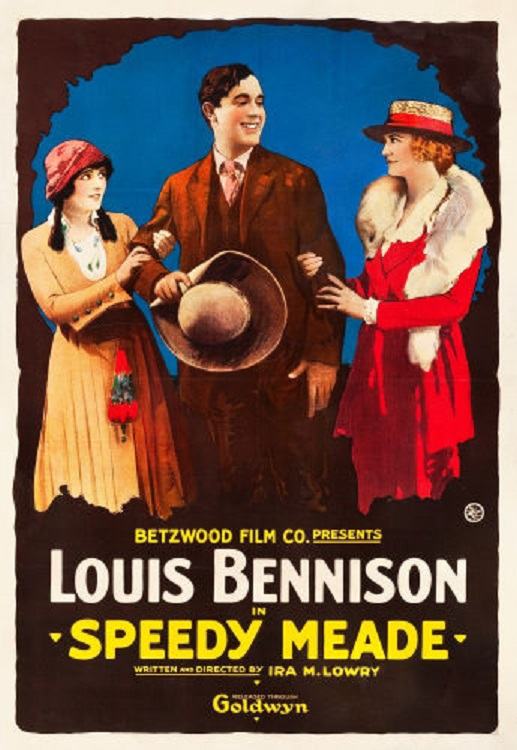
Director's Spotlight: United States
A Deep Dive into the 1919 Vision of Ira M. Lowry
Few works in United States cinema carry the same weight as Speedy Meade, especially regarding the cultural zeitgeist captured so perfectly by Ira M. Lowry in 1919. Utilizing a 1919-specific aesthetic that remains timeless, it serves as a blueprint for future generations of cult directors.
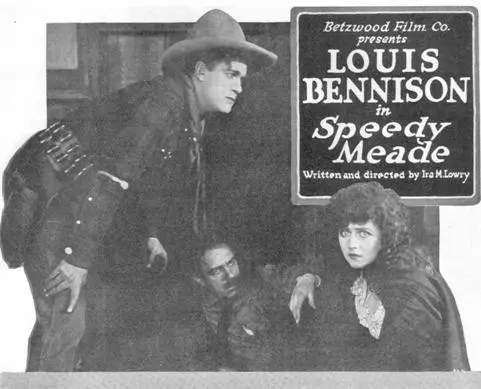
In Speedy Meade, Ira M. Lowry pushes the boundaries of conventional narrative. The film's unique approach to its subject matter has sparked endless debates and interpretations among cinephiles and critics alike.
| Cinematography | Handheld |
| Soundtrack | Experimental |
| Editing | Invisible |
| Art Direction | Kitsch |
Visualizing the convergence of Ira M. Lowry's style and the core cult narrative.
After his assistant, Bud Lester, is killed, Texas Ranger Speedy Meade bids farewell to his girl friend, convent student Mary Dillman, and sets out to break up a gang of cattle thieves operating on the border. After arriving at the scene, Speedy dons different disguises, including that of a derelict bartender and an old man selling stolen cattle. Speedy obtains valuable information and learns that the leader of the band is Henry Dillman, Mary's father. Mary arrives and complicates Speedy's plans. He trails the gang to their secret rendezvous, but Mary causes him to lose his advantage and he is captured, bound, and gagged. Dillman is accused by the others in the gang of having betrayed them to the ranger. A fight ensues in which Dillman is shot and Mary is seized by a bandit. Speedy frees himself and knocks out Mary's assailant. Dillman confesses he is not really Mary's father, and Mary goes off with Speedy.
Decades after its release, Speedy Meade remains a vital piece of the cinematic puzzle. Its influence can be seen in countless modern works, solidifying Ira M. Lowry's status as a master of the craft in United States and beyond.