
DbcultAccessing Vault...
Director's Spotlight
Senior Film Conservator
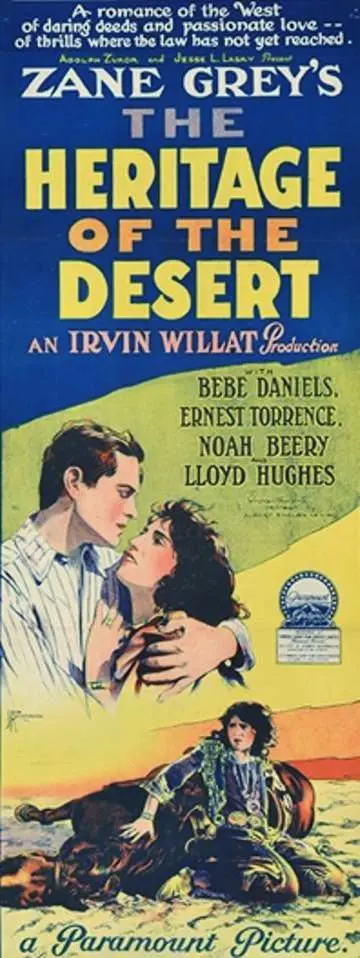
Director's Spotlight: United States
A Deep Dive into the 1924 Vision of Irvin Willat
Few works in United States cinema carry the same weight as The Heritage of the Desert, especially regarding the cultural zeitgeist captured so perfectly by Irvin Willat in 1924. Utilizing a 1924-specific aesthetic that remains timeless, it serves as a blueprint for future generations of Romance directors.

In The Heritage of the Desert, Irvin Willat pushes the boundaries of conventional narrative. The film's unique approach to its subject matter has sparked endless debates and interpretations among cinephiles and critics alike.
| Cinematography | Noir-Inspired |
| Soundtrack | Experimental |
| Editing | Invisible |
| Art Direction | Kitsch |
Visualizing the convergence of Irvin Willat's style and the core Romance narrative.
Pioneer rancher August Naab finds Easterner Jack Hare in the desert and takes him home, where Naab's Spanish-Indian ward Mescal cares for and falls in love with Jack though she is betrothed to Naab's wayward son Snap. To avoid marrying Snap, Mescal flees into the desert and is captured there by desert pirate Mal Holderness, a ruthless man seeking to control the surrounding area's water rights by buying or seizing the local ranches. Because Naab has refused to sell, Holderness begins a feud, taking Mescal prisoner and killing her prospective bridegroom Snap, who has followed her into the desert. As the leader of the law-abiding community, Naab, with a group of sympathetic Indians, burns down the neighboring town serving as a hideout for Holderness and his gang. Mescal is rescued and returned to Jack.
Decades after its release, The Heritage of the Desert remains a vital piece of the cinematic puzzle. Its influence can be seen in countless modern works, solidifying Irvin Willat's status as a master of the craft in United States and beyond.