
DbcultAccessing Vault...
Director's Spotlight
Senior Film Conservator
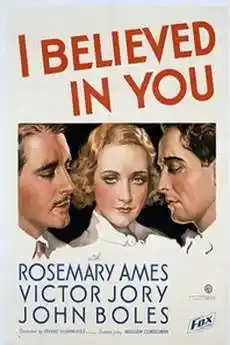
Director's Spotlight: United States
A Deep Dive into the 1934 Vision of Irving Cummings
Few works in United States cinema carry the same weight as I Believed in You, especially regarding the technical innovation that Irving Cummings introduced to the Drama format. Subverting the expectations of the typical 1934 audience, it bridges the gap between traditional Drama and contemporary vision.
In I Believed in You, Irving Cummings pushes the boundaries of conventional narrative. The film's unique approach to its subject matter has sparked endless debates and interpretations among cinephiles and critics alike.
To fully appreciate I Believed in You, one must consider the cinematic climate of 1934. During this period, United States was undergoing significant artistic shifts, and Irving Cummings was at the forefront of this Drama movement, often challenging established norms.
| Cinematography | Static |
| Soundtrack | Diegetic |
| Editing | Elliptical |
| Art Direction | Expressionist |
Visualizing the convergence of Irving Cummings's style and the core Drama narrative.
After miners attack Jim Crowl, a labor agitator trying to incite them to strike, he seeks refuge from the police at the home of True Merrill, a naive would-be writer who has lived all her life with her recently deceased father. Jim cajoles True into wanting to experience love, hate and suffering, and convinces her to accompany him to New York. In Greenwich Village, True enjoys Jim's Bohemian friends, all of whom patronize the Pig's Eye cafe: unpublished poet Saracen Jones; struggling artist Russell Storm; and dancer Vavara, with whom, unknown to True, Jim is involved. When the group, who all live in Russell's apartment, are evicted, Jim, who is really an agitator for mercenary reasons, conducts a sidewalk auction of Russell's paintings, which turns into a brawl due to Jim's inflammatory criticisms of society. True slaps wealthy dilettante Michael Harrison after he facetiously offers to buy a painting just to destroy it, and she is sentenced to ten days in jail, as is Jim. Later, Michael apologizes to True and, after calling her friends phonies, invites her to meet successful artists and writers. When True argues that her friends have not had the opportunities that Michael's friends have had, Michael proposes a deal: he will pay the expenses of her friends for six months, and if even one makes good or shows gratitude, he will buy True a drink; however, if they all fail, she will have an obligation to him. True agrees and writes a novel entitled I Believed in You . The others, however, squander their money. When they demand more, True explodes and calls them fakers. Still believing in Jim, she then overhears him tell another woman the same things he once told her. She walks disillusioned throughout the city and onto a bridge, but after hearing voices from the past, she gains new confidence and visits the publishers Lang and Long, who sign her to a contract. True then gives Michael her royalty check as her first repayment. When he proposes, she says that she must go on alone for now, and that maybe they will meet in the future.
Decades after its release, I Believed in You remains a vital piece of the cinematic puzzle. Its influence can be seen in countless modern works, solidifying Irving Cummings's status as a master of the craft in United States and beyond.