
DbcultAccessing Vault...
Director's Spotlight
Senior Film Conservator
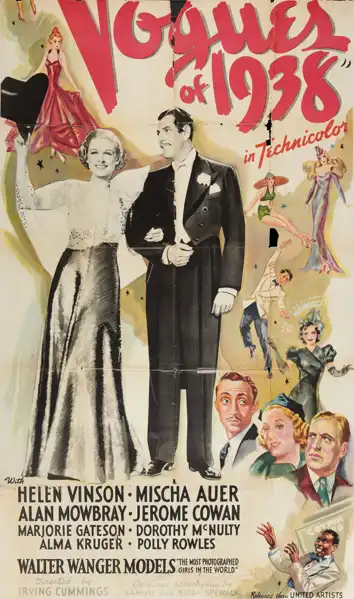
Director's Spotlight: United States
A Deep Dive into the 1937 Vision of Irving Cummings
The artistic breakthrough represented by Vogues of 1938 in 1937 highlights the uncompromising vision of Irving Cummings that defines this Comedy masterpiece. In the context of United States's rich cinematic history, it captures a specific kind of cinematic magic that is rarely replicated.
In Vogues of 1938, Irving Cummings pushes the boundaries of conventional narrative. The film's unique approach to its subject matter has sparked endless debates and interpretations among cinephiles and critics alike.
To fully appreciate Vogues of 1938, one must consider the cinematic climate of 1937. During this period, United States was undergoing significant artistic shifts, and Irving Cummings was at the forefront of this Comedy movement, often challenging established norms.
| Cinematography | High-Contrast |
| Soundtrack | Experimental |
| Editing | Elliptical |
| Art Direction | Expressionist |
Visualizing the convergence of Irving Cummings's style and the core Comedy narrative.
The blueblooded Van Kletterings are broke; debutante Wendy, slated to remedy this by marrying rich bore Henry Morgan, instead leaves him at the altar and goes to work as a model for high-fashion clothing designer George Curson, whom she soon falls for. But he's happily married (at least on his side) and going into debt financing a show to please wife Mary's desire for stardom. Vindictive Morgan, jealous of George, hopes to hasten his ruin. Can the House of Curson be saved?
Decades after its release, Vogues of 1938 remains a vital piece of the cinematic puzzle. Its influence can be seen in countless modern works, solidifying Irving Cummings's status as a master of the craft in United States and beyond.