
DbcultAccessing Vault...
Director's Spotlight
Senior Film Conservator
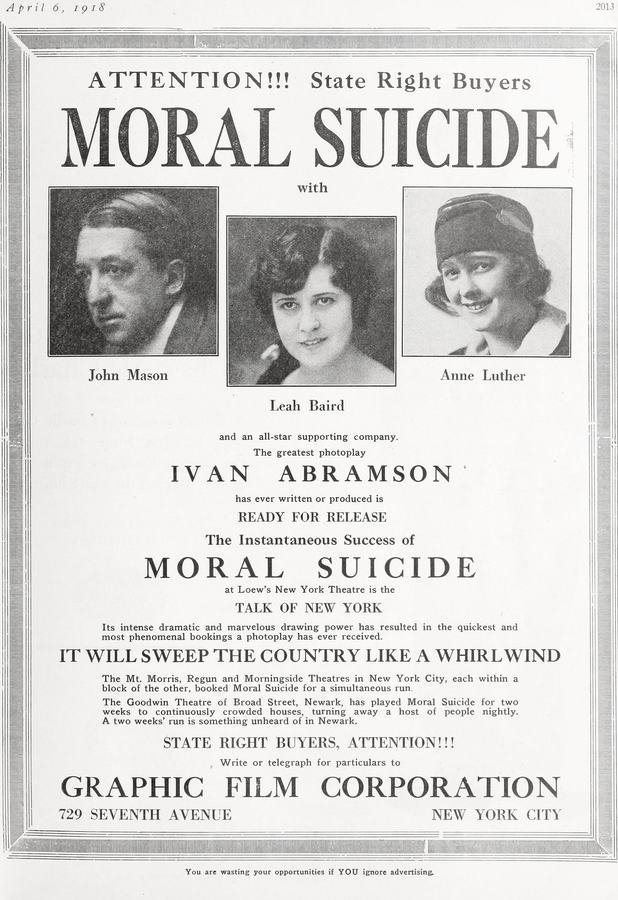
Director's Spotlight: United States
A Deep Dive into the 1918 Vision of Ivan Abramson
The 1918 release of Moral Suicide marked a significant moment for the stylistic boundaries pushed by Ivan Abramson during the production. In the context of United States's rich cinematic history, it invites us to question our own perceptions of cult narratives.
In Moral Suicide, Ivan Abramson pushes the boundaries of conventional narrative. The film's unique approach to its subject matter has sparked endless debates and interpretations among cinephiles and critics alike.
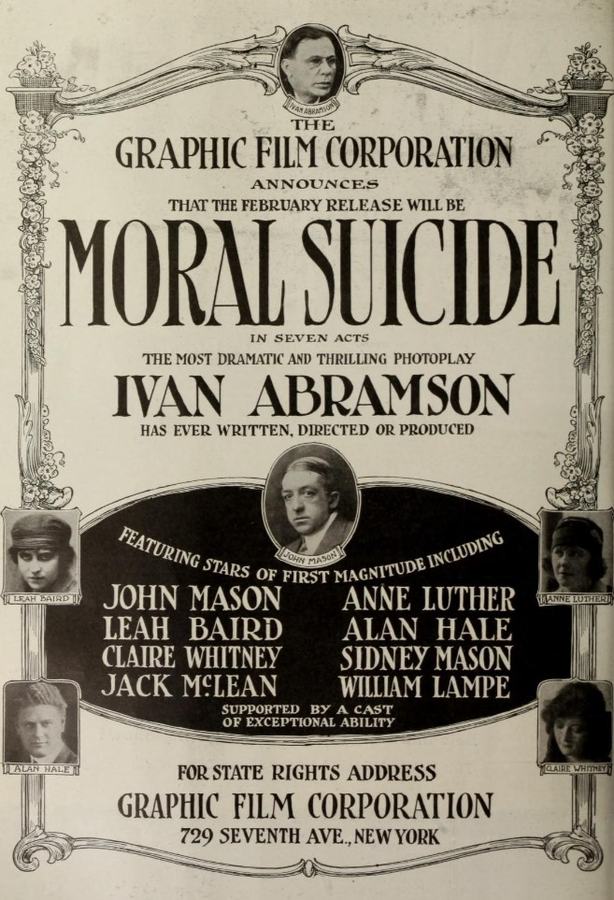
While deeply rooted in United States, Moral Suicide has achieved a global reach, influencing directors from various backgrounds. Its ability to translate cult tropes into a universal cinematic language is why it remains a cult staple decades after its 1918 release.
| Cinematography | Noir-Inspired |
| Soundtrack | Experimental |
| Editing | Invisible |
| Art Direction | Kitsch |
Visualizing the convergence of Ivan Abramson's style and the core cult narrative.
Wealthy Richard Covington, although aging and lonely, distresses his children, Waverly and Beatrice, by marrying a heartless seductress named Fay Hope. Because Fay's extravagant spending threatens to ruin Richard, Beatrice confronts her, which prompts Richard, who is hopelessly in love with the beautiful vampire, to order his daughter from the house. Fay introduces her lover, "Lucky" Travers, into the Covington household as her brother, but Waverly catches them in each other's arms and, in a fit of insanity, shoots at Lucky. The bullet strikes and kills Fay, and Waverly is locked in an asylum, leaving Richard broken, penniless and completely alone. In New York, he finds work carrying sandwich boards that advertise a cabaret, where he sees Beatrice warmly conversing with Lucky. Beatrice consoles her distraught father by admitting that she now works for the Secret Service. After securing Lucky's arrest, Beatrice returns to her fiance, Rodman Daniels, who has arranged Waverly's release from the asylum, and the entire family is reunited.
Decades after its release, Moral Suicide remains a vital piece of the cinematic puzzle. Its influence can be seen in countless modern works, solidifying Ivan Abramson's status as a master of the craft in United States and beyond.