
DbcultAccessing Vault...
Director's Spotlight
Senior Film Conservator
Director's Spotlight: United States
A Deep Dive into the 1915 Vision of Ivan Abramson
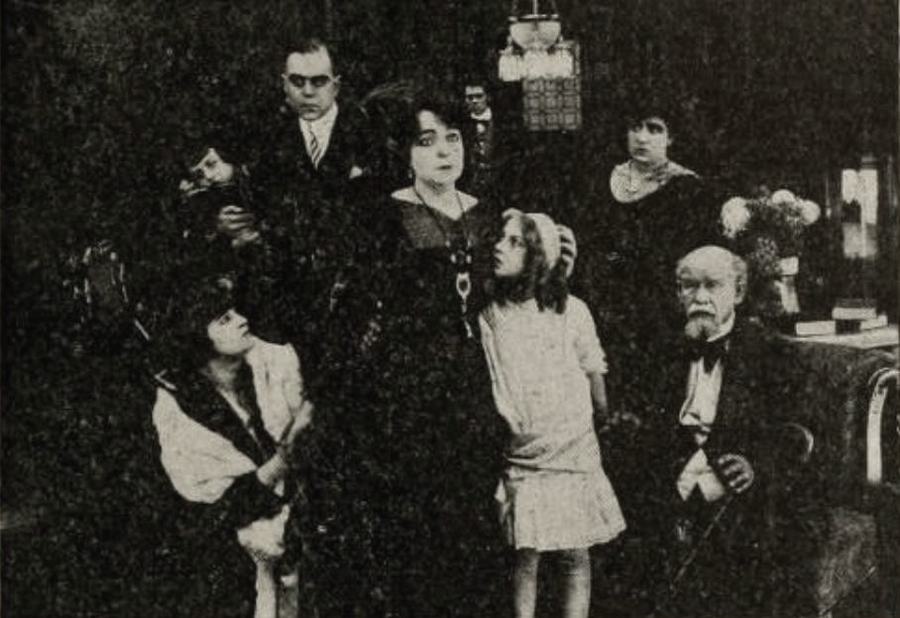
To understand the modern evolution of United States film, one must first look at The Unwelcome Wife and the collaborative alchemy between Ivan Abramson and the 1915 creative team. Subverting the expectations of the typical 1915 audience, it remains a vital reference point for anyone studying the evolution of Ivan Abramson.
In The Unwelcome Wife, Ivan Abramson pushes the boundaries of conventional narrative. The film's unique approach to its subject matter has sparked endless debates and interpretations among cinephiles and critics alike.
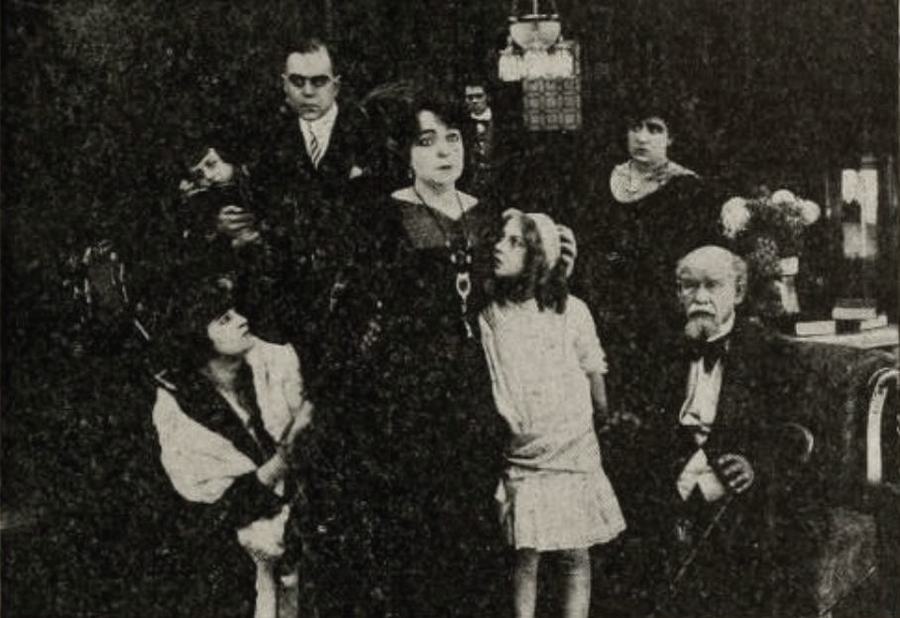
In this work, Ivan Abramson explores the intersection of cult and United States cultural identity. The meticulous attention to detail suggests a deep-seated commitment to pushing the boundaries of the medium, ensuring that The Unwelcome Wife remains a relevant topic of study for cult enthusiasts.
| Cinematography | Handheld |
| Soundtrack | Diegetic |
| Editing | Elliptical |
| Art Direction | Expressionist |
Visualizing the convergence of Ivan Abramson's style and the core cult narrative.
Blanche Scott, a famous actress married to rich lawyer Martin Scott, is living happily in New York, but her cousin Elsie is married to Frank Edmonds, a performer who mars her happiness through infidelity. Blanche invites Elsie to stay with her, and induces her husband to procure a divorce for Elsie. Blanche's blind grandfather George Moore lives with them. Previous to her marriage to Scott, Blanche met with an automobile accident in which both of her parents were killed, and from the shock she became mentally deranged, but shortly afterward recovered. At the birth of Blanche's first child Viola, her attack of insanity returns. Physicians declare her case hopeless, and she is confined to an asylum. Her cousin Elsie adopts Viola. Two years elapse and Blanche is still at the asylum. Meanwhile, Elsie has secured a divorce from her husband. During this time Scott makes advances to Elsie, but is repulsed. Scott's love for Elsie prompts him to bring suit for an annulment of his marriage to Blanche on the ground of her being insane prior to his marriage, and he succeeds in having his marriage annulled. Blanche, in her hallucinations, raves both of her child and of her past successes on the stage, and very often sees herself playing her favorite roles of various classic plays, in which she starred. Scott, assuring Elsie that Blanche's condition is hopeless, is successful in winning Elsie's love, and in due course of time, they are married. A year later Elsie gives birth to a boy. All are overjoyed, except the blind grandfather, who still lives with Scott. The moral wrong, though legally done to his grandchild Blanche rends his heart with sorrow. Six years later: All are living happily, having forgotten the past. One day Scott receives a letter from the superintendent of the asylum, notifying him that Blanche has unexpectedly recovered and is in a condition to be taken home. Scott shows the letter to Elsie, who insists that he bring Blanche back. Scott refuses, but Elsie fervently pleads with her husband to gratify her wish. He still remains obdurate. Moore, overhearing Elsie's plea, cautions Scott not to tell anything to Blanche for the time being, as it may cause a relapse. Scott, convinced by the prudent advice of the blind old man and Elsie's pathetic appeal, finally yields and brings Blanche home. Blanche's joy upon her return is somewhat dampened by her former husband's coolness. She suspects that there is some secret in the house, and questions Scott, Elsie, her grandfather, and the servants, but gets no satisfactory reply. Baffled in her efforts she at last questions her own eight-year-old daughter Viola, who tells her the truth. Elsie, wishing to sacrifice her own happiness for Blanche, decides to go away with her child, Eddie, but Blanche, realizing that she cannot live under the same roof with her former husband, prevents Elsie from leaving. The ex-wife then seizes a knife near at hand and attempts to cut her throat, but is prevented by Scott and Elsie. The furious rage and wild excitement again disturb her mental balance, and she is pronounced incurably insane. Blanche, while being led to the ambulance, wildly calls for Viola. Moore, sunk in unutterable grief, goes to her, but his suffering is beyond human endurance. He is overcome by his emotions, stricken with heart failure and dies. Blanche, seeing him fall, breaks loose from the physicians and rushes madly to the prostrate form of her grandfather, kneels over him, imagines that she performs the scene of La Tosca, where she kills the Baron and laughs hysterically.
Decades after its release, The Unwelcome Wife remains a vital piece of the cinematic puzzle. Its influence can be seen in countless modern works, solidifying Ivan Abramson's status as a master of the craft in United States and beyond.