
DbcultAccessing Vault...
Director's Spotlight
Senior Film Conservator
Director's Spotlight: United States
A Deep Dive into the 1914 Vision of J. Farrell MacDonald
In the storied career of J. Farrell MacDonald, The Last Egyptian stands as a the atmospheric immersion that J. Farrell MacDonald achieves throughout The Last Egyptian. Reflecting the political and social shifts of the 1914s, it reinforces the idea that cinema is a medium of infinite possibilities.
In The Last Egyptian, J. Farrell MacDonald pushes the boundaries of conventional narrative. The film's unique approach to its subject matter has sparked endless debates and interpretations among cinephiles and critics alike.
In this work, J. Farrell MacDonald explores the intersection of cult and United States cultural identity. The meticulous attention to detail suggests a deep-seated commitment to pushing the boundaries of the medium, ensuring that The Last Egyptian remains a relevant topic of study for cult enthusiasts.
| Cinematography | Handheld |
| Soundtrack | Experimental |
| Editing | Invisible |
| Art Direction | Kitsch |
Visualizing the convergence of J. Farrell MacDonald's style and the core cult narrative.
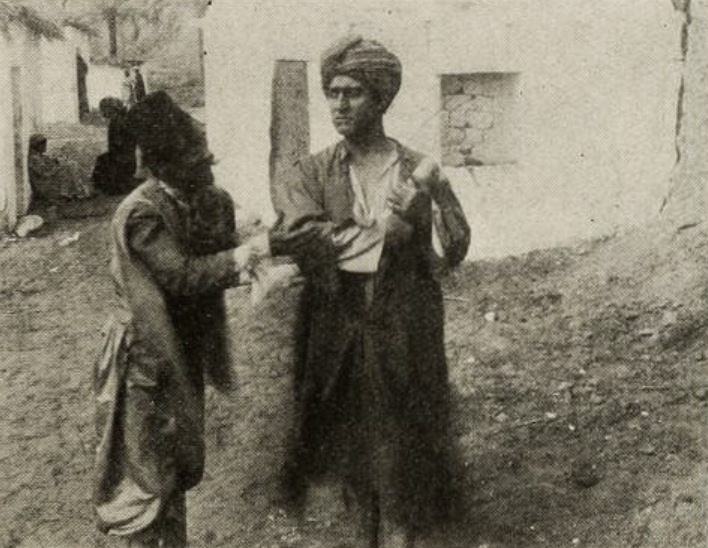
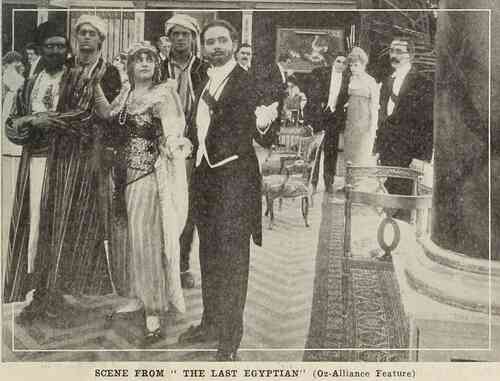
Kara, the last member of a long list of Egyptian rulers, learns from his grandmother on her deathbed that an Englishman, Lord Roane, had dishonored the daughter of the imperial house, and that in his veins together with the blood of kings flows the blood of the perfidious nobleman. Before passing away she gives Kara the key to the secret burial vaults and treasure chamber. Kara vows to wreak a belated vengeance on the head of the man who sullied his family's honor. He takes with him enough treasures to carry out his purpose, goes to Cairo where he is received as a royal prince, and finds Lord Roane. With Oriental cunning he sees that he can best pierce his enemy to the heart through the nobleman's beautiful granddaughter, Lady Aneth. He asks her hand in marriage, is refused, but still clings to his purpose. Enticing the girl's father to gamble, he ruins him, then offers to restore the winnings if the Englishman will give his consent. The nobleman puts him off, but the prince goes direct to the girl, and threatens her father with ruin unless she agrees to marry him, intending to inveigle her into a mock marriage. To save her father from ruin and disgrace she consents to marry Kara at his palace that night. Winston Bey, her English lover, rescues her before she falls into the Egyptian clutches and hurries her to his yacht and sends her up the Nile. Kara, whose plans for a mock wedding have been completed, hears of her escape, leaves Cairo and at the head of a band of desert robbers attacks, the vessel and makes Lady Aneth a prisoner. The robber chief refuses to deliver her to Kara until he has been paid. The prince hastens to the secret chamber for gold and Viscount Cousinor, Aneth's father, follows him there. A terrific struggle follows. The Englishman overpowers his antagonist, locks the stone door upon the Egyptian and leaves him to perish in the tomb of his ancestors. As the viscount is leaving the tomb he is killed by a slave girl who mistakes him for Kara. Thus is the house of Kara avenged. In the meantime the British authorities hear of the attack on the yacht, and dispatch a column of troops to the scene. Upon their approach the robbers flee and Lady Aneth is restored to her lover's arms.
Decades after its release, The Last Egyptian remains a vital piece of the cinematic puzzle. Its influence can be seen in countless modern works, solidifying J. Farrell MacDonald's status as a master of the craft in United States and beyond.