
DbcultAccessing Vault...
Director's Spotlight
Senior Film Conservator
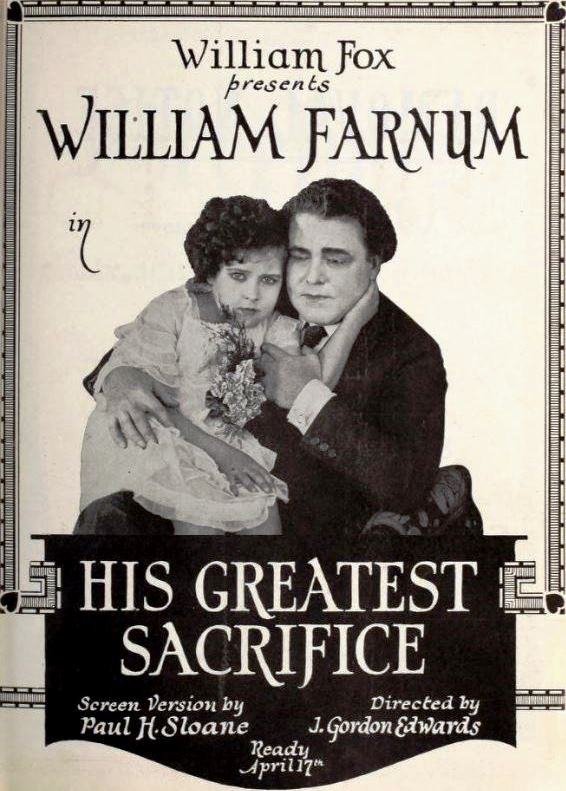
Director's Spotlight: United States
A Deep Dive into the 1921 Vision of J. Gordon Edwards
As we revisit the 1921 masterpiece His Greatest Sacrifice, we are struck by the atmospheric immersion that J. Gordon Edwards achieves throughout His Greatest Sacrifice. Exploring the nuances of the human condition with Drama flair, it solidifies J. Gordon Edwards's reputation as a master of the craft.
In His Greatest Sacrifice, J. Gordon Edwards pushes the boundaries of conventional narrative. The film's unique approach to its subject matter has sparked endless debates and interpretations among cinephiles and critics alike.
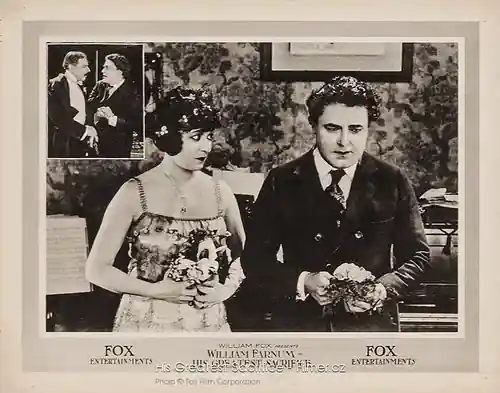
In this work, J. Gordon Edwards explores the intersection of Drama and United States cultural identity. The meticulous attention to detail suggests a deep-seated commitment to pushing the boundaries of the medium, ensuring that His Greatest Sacrifice remains a relevant topic of study for Drama enthusiasts.
| Cinematography | Noir-Inspired |
| Soundtrack | Diegetic |
| Editing | Elliptical |
| Art Direction | Expressionist |
Visualizing the convergence of J. Gordon Edwards's style and the core Drama narrative.
Richard Hall is a successful writer; his wife, Alice is interested in pursuing a career as a singer. She meets musical agent James Hamilton, who arranges an opera engagement with Rimini, an impresario. Hall quarrels with his wife over this and they separate, with Hall taking their daughter Grace. When Hall attempts to reconcile with his wife, he finds Hamilton with her. Enraged, he kills Hamilton and is sentenced to life in prison. Twenty years later, Hall is paroled. His wife has had a successful career as a singer, but her best years are behind her. She attempts to reconcile with Grace, but her daughter, now a widow with a child, refuses. Grace now works as a secretary for a philanthropist named John Reed, who wants to marry her. Unable to find work, Hall applies to Reed for help and recognizes Grace there. When Hall is arrested again, he refuses help, because he feels he has come between Grace and Reed.
Decades after its release, His Greatest Sacrifice remains a vital piece of the cinematic puzzle. Its influence can be seen in countless modern works, solidifying J. Gordon Edwards's status as a master of the craft in United States and beyond.