
DbcultAccessing Vault...
Director's Spotlight
Senior Film Conservator
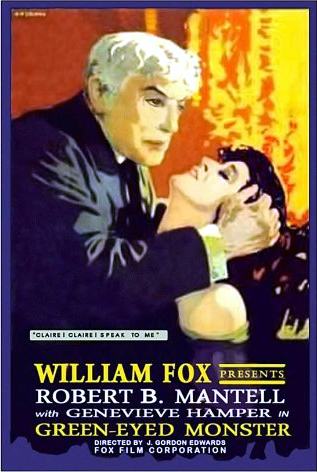
Director's Spotlight: United States
A Deep Dive into the 1916 Vision of J. Gordon Edwards
As we revisit the 1916 masterpiece The Green-Eyed Monster, we are struck by the meticulous attention to detail that J. Gordon Edwards applied to every frame. Anchored by a narrative that is both personal and universal, it bridges the gap between traditional cult and contemporary vision.
In The Green-Eyed Monster, J. Gordon Edwards pushes the boundaries of conventional narrative. The film's unique approach to its subject matter has sparked endless debates and interpretations among cinephiles and critics alike.
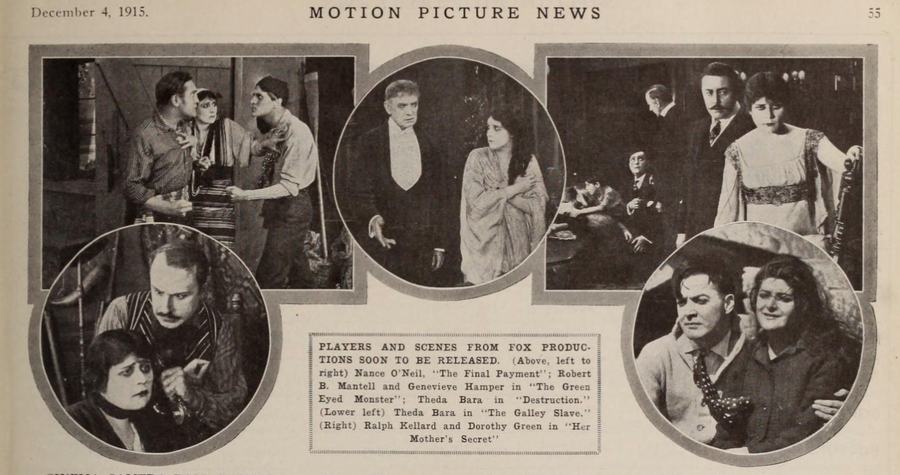
While deeply rooted in United States, The Green-Eyed Monster has achieved a global reach, influencing directors from various backgrounds. Its ability to translate cult tropes into a universal cinematic language is why it remains a cult staple decades after its 1916 release.
| Cinematography | Deep Focus |
| Soundtrack | Synth-Heavy |
| Editing | Disjunctive |
| Art Direction | Baroque |
Visualizing the convergence of J. Gordon Edwards's style and the core cult narrative.
The story opens at a chateau where gay French life is depicted, introducing Raimond de Mornay, the elder of two sons who secretly loves his cousin Claire. He makes no open declaration of his affection, though, and his brother Louis woos and wins her. Unable to stand the jealousy their marriage arouses, Raimond goes to Vienna, where he engages in riotous living. His father's death calls him home, but he is unable to watch the intimacy of the woman he loves with his brother, and he leaves for India where he stays for several years, becoming versed in the ways of the Hindu. A letter from his nephew Paul asks him to come back. Believing he has stifled the jealousy that sent him away, he returns. The green-eyed monster attacks him with irresistible force and calling into play a curious box, that somewhere in its mechanism contains a drop of cobra poison, he gives it to his brother whose inquisitiveness over its mysterious nature releases a hidden spring and the virus is injected into his blood. He secretes the body in a casket, another of his possessions obtained in India. The casket guards his secret until Claire becomes suspicious and accuses him of the deed. His mind, brooding over his crime, becomes deranged and although pleading innocence, leads Claire to the casket and throws open the lid. The shock of unexpectedly seeing her dead husband kills her. Again Raimond escapes suspicion, but as time elapses he forms a dislike for his nephew, until, becoming obsessed with the idea of showing Paul what is inside of the chest, he drags the frightened child to the heavy box and shows him all that is left of what was once his father. Later, after becoming a raving maniac. Raimond falls dead at the sight of his brother's skeleton.
Decades after its release, The Green-Eyed Monster remains a vital piece of the cinematic puzzle. Its influence can be seen in countless modern works, solidifying J. Gordon Edwards's status as a master of the craft in United States and beyond.