
DbcultAccessing Vault...
Director's Spotlight
Senior Film Conservator
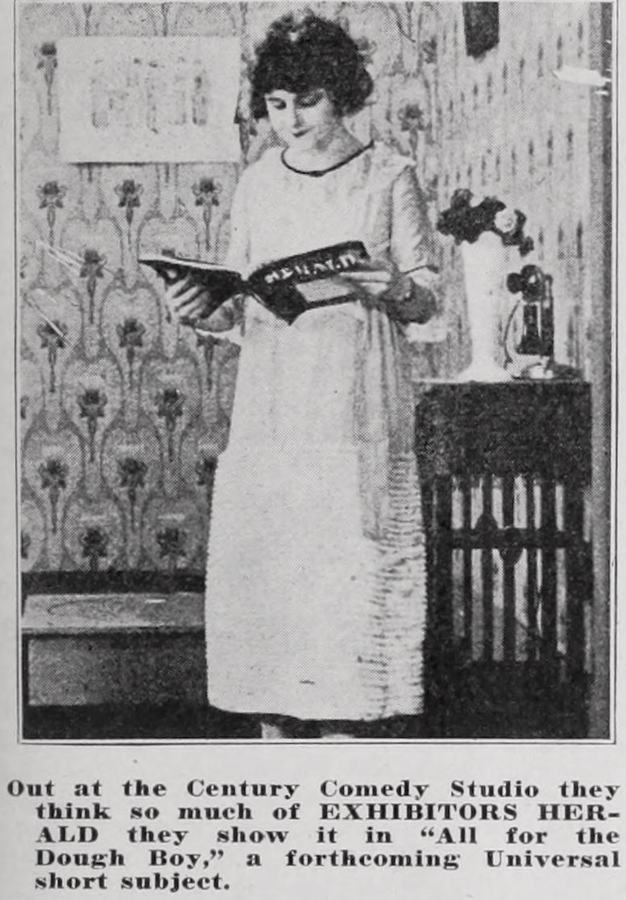
Director's Spotlight: United States
A Deep Dive into the 1920 Vision of J.A. Howe
As we revisit the 1920 masterpiece All for the Dough Bag, we are struck by the atmospheric immersion that J.A. Howe achieves throughout All for the Dough Bag. Exploring the nuances of the human condition with Short flair, it solidifies J.A. Howe's reputation as a master of the craft.
In All for the Dough Bag, J.A. Howe pushes the boundaries of conventional narrative. The film's unique approach to its subject matter has sparked endless debates and interpretations among cinephiles and critics alike.
To fully appreciate All for the Dough Bag, one must consider the cinematic climate of 1920. During this period, United States was undergoing significant artistic shifts, and J.A. Howe was at the forefront of this Short movement, often challenging established norms.
| Cinematography | Noir-Inspired |
| Soundtrack | Minimalist |
| Editing | Disjunctive |
| Art Direction | Baroque |
Visualizing the convergence of J.A. Howe's style and the core Short narrative.
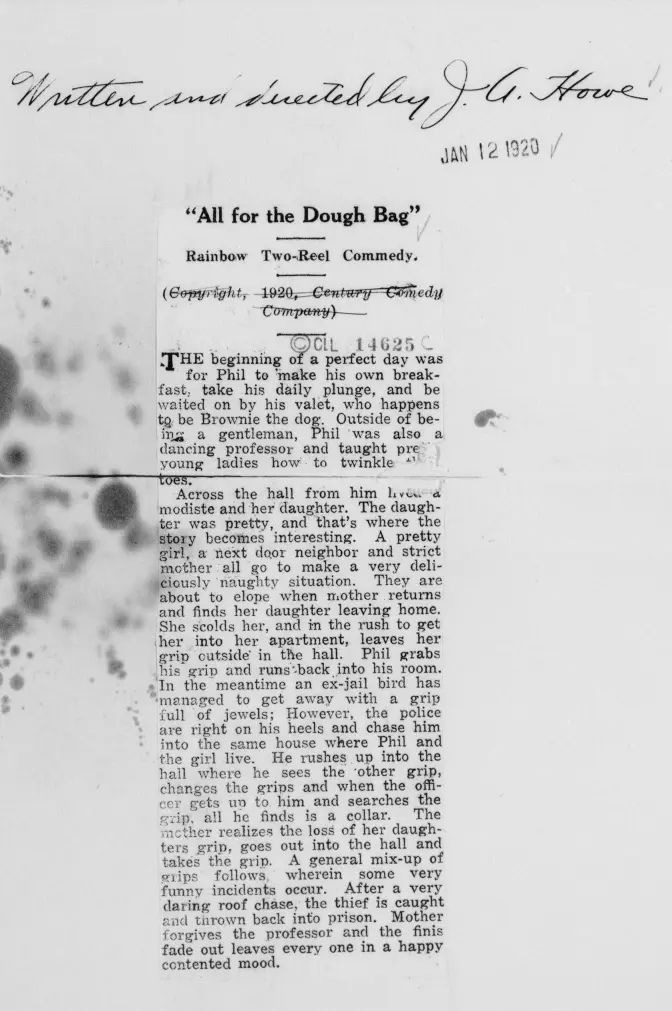
The beginning of a perfect day was for Phil to make his own breakfast, take his daily plunge, and be waited on by his valet, who happens to be Brownie the dog. Outside of being a gentleman, Phil was also a dancing professor and taught pretty young ladies how to twinkle their toes. Across the hall from him lived a modiste and her daughter. The daughter was pretty and that's where the story becomes interesting. A pretty girl, a next door neighbor and strict mother all go to make a very deliciously naughty situation. They are about to elope when mother returns and finds her daughter leaving home. She scolds her, and in the rush to get her into her apartment, leaves her grip outside in the hall. Phil grabs his grip and runs back into his room. In the meantime an ex-jail bird has managed to get away with a grip full of jewels; However, the police are right on his heels and chase him into the same house where Phil and the girl live. He rushes up into the hall where he sees the other grip, changes the grips and when the officer gets up to him and searches the grip, all he finds is a collar. The mother realizes the loss of her daughter's grip, goes out into the hall and takes the grip. A general mix-up of grips follows wherein some very funny incidents occur. After a very daring roof chase, the thief is caught and thrown back into prison. Mother forgives the professor and the finis fade out leaves every one in a happy contented mood.
Decades after its release, All for the Dough Bag remains a vital piece of the cinematic puzzle. Its influence can be seen in countless modern works, solidifying J.A. Howe's status as a master of the craft in United States and beyond.