
DbcultAccessing Vault...
Director's Spotlight
Senior Film Conservator
Director's Spotlight: United States
A Deep Dive into the 1919 Vision of J.A. Howe
As we revisit the 1919 masterpiece Jazz and Jailbirds, we are struck by the atmospheric immersion that J.A. Howe achieves throughout Jazz and Jailbirds. Exploring the nuances of the human condition with cult flair, it solidifies J.A. Howe's reputation as a master of the craft.
In Jazz and Jailbirds, J.A. Howe pushes the boundaries of conventional narrative. The film's unique approach to its subject matter has sparked endless debates and interpretations among cinephiles and critics alike.
The visual language of Jazz and Jailbirds is defined by its use of shadows and framing, a hallmark of J.A. Howe's style. By utilizing a 1919-era palette, the film creates an immersive experience that perfectly complements its cult themes.
| Cinematography | Deep Focus |
| Soundtrack | Experimental |
| Editing | Invisible |
| Art Direction | Kitsch |
Visualizing the convergence of J.A. Howe's style and the core cult narrative.
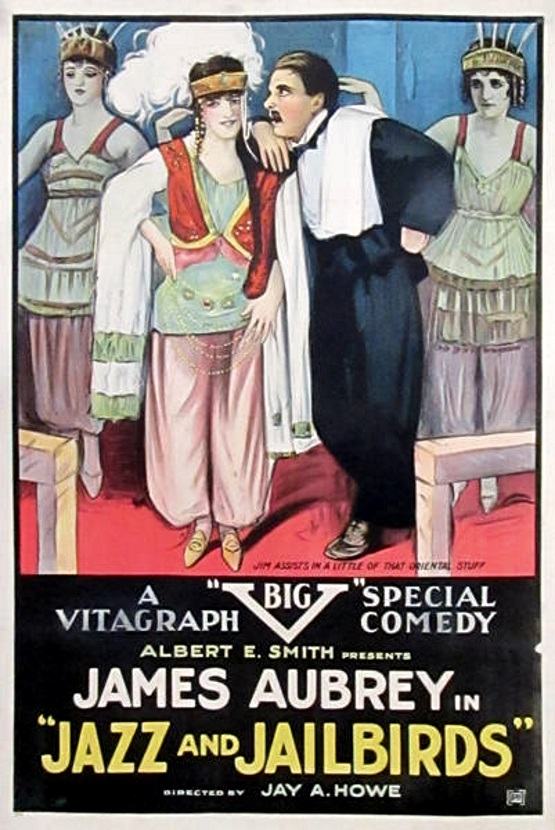
At the Come On Inn, Jimmy, the waiter, is sweet on Mlle. Twinkletoes. The manager interferes, and Jimmy leads him to believe that it was all part of the act, his loving Mlle. Twinkletoes. I.M. Ruff, warden of the jail, arrives with two of the Ruff family - and Jimmy is assigned to attend him. Through much carelessness and vengeance, Jimmy is finally forced to apologize to the warden. While he is doing so, the Count De Razzbury, picks the warden's pocket book from his pocket, and then, fearing detection, slips it into Jimmy's pocket. Jimmy is arrested - his explanations scoffed at. He is taken to prison. Mr. Ruff and his wife plan a reception, and Mlle. Twinkletoes is hired for the occasion. Count De Razzbury, the guest of honor, accepts the invitation, much to Miss Ruff's steady company's jealousy. While the warden is taking his morning exercise with the convicts, Jimmy manages by a ruse to escape, meets "the steady company" who invites him to take the place of the distinguished guest, and Jimmy does so. Upon being presented to Mr. Ruff, Jimmy receives reminders of the Hoosegow, and the warden suspects but is not sure, and later, when Jimmy's disguise ''slips" he recognizes his naked face. Mlle. Twinkletoes confesses to Jimmy's innocence - and Ruff believing, promises a $1000 could he but right the wrong. Jimmy , although badly beaten after his encounter with Ruff, comes to, and grabs the money before Buff can take back is offer.
Decades after its release, Jazz and Jailbirds remains a vital piece of the cinematic puzzle. Its influence can be seen in countless modern works, solidifying J.A. Howe's status as a master of the craft in United States and beyond.