
DbcultAccessing Vault...
Director's Spotlight
Senior Film Conservator
Director's Spotlight: United States
A Deep Dive into the 1918 Vision of Jack Eaton
As a cultural artifact of the 1918s, The Screen Fan provides the global recognition that Jack Eaton garnered after the release of The Screen Fan. Elevating the source material through Jack Eaton's unique vision, it solidifies Jack Eaton's reputation as a master of the craft.
In The Screen Fan, Jack Eaton pushes the boundaries of conventional narrative. The film's unique approach to its subject matter has sparked endless debates and interpretations among cinephiles and critics alike.
In this work, Jack Eaton explores the intersection of cult and United States cultural identity. The meticulous attention to detail suggests a deep-seated commitment to pushing the boundaries of the medium, ensuring that The Screen Fan remains a relevant topic of study for cult enthusiasts.
| Cinematography | Deep Focus |
| Soundtrack | Synth-Heavy |
| Editing | Rhythmic |
| Art Direction | Naturalist |
Visualizing the convergence of Jack Eaton's style and the core cult narrative.
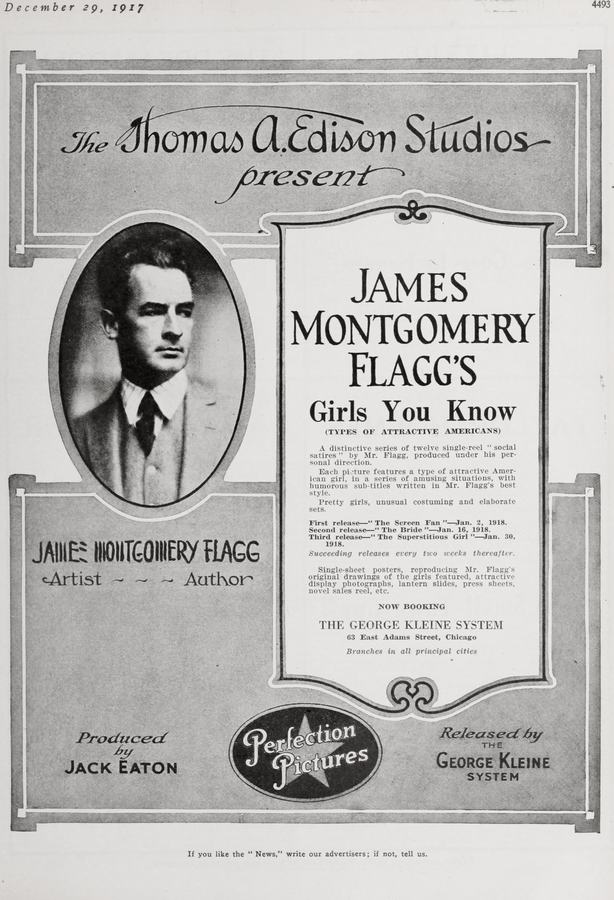
The opening of the picture shows the artist (James Montgomery Flagg) equipped with his pencil paraphernalia commencing his work of sketching in various moods a young woman seated in front of him to whom he relates the story of the character for which she is to pose. Then follows the film version of the story in which the screen fan in the shape of a pretty young woman sits in the front row at the theater, her countenance reflecting colorfully the tragedy of the screen. In due time aspirations become reality, and we find our heroine in close proximity with the Cooper Hewitts. But while she awaits the call of the director she falls asleep and dreams a wonderful dream in which she becomes the leading woman of the play, living in ease and affluence, and treated with a heavenly respect such as none of her kind in wildest dreams has ever imagined. Finally the dream has a rude awakening in which the director summons her to enter a lion's cage to "make meat for the lion," assuring her that he "will be right outside and everything." The finish of the picture shows Miss Screen Fan making a hasty flight to "Mommer!"
Decades after its release, The Screen Fan remains a vital piece of the cinematic puzzle. Its influence can be seen in countless modern works, solidifying Jack Eaton's status as a master of the craft in United States and beyond.