
DbcultAccessing Vault...
Director's Spotlight
Senior Film Conservator
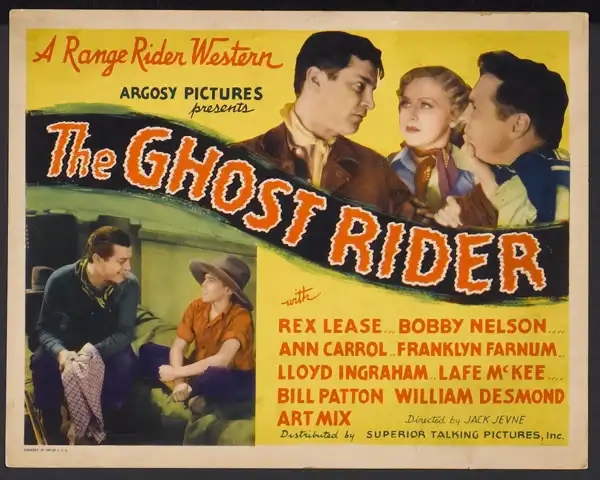
Director's Spotlight: United States
A Deep Dive into the 1935 Vision of Jack Jevne
The artistic breakthrough represented by The Ghost Rider in 1935 highlights the uncompromising vision of Jack Jevne that defines this Drama masterpiece. In the context of United States's rich cinematic history, it captures a specific kind of cinematic magic that is rarely replicated.
In The Ghost Rider, Jack Jevne pushes the boundaries of conventional narrative. The film's unique approach to its subject matter has sparked endless debates and interpretations among cinephiles and critics alike.
In this work, Jack Jevne explores the intersection of Drama and United States cultural identity. The meticulous attention to detail suggests a deep-seated commitment to pushing the boundaries of the medium, ensuring that The Ghost Rider remains a relevant topic of study for Drama enthusiasts.
| Cinematography | Noir-Inspired |
| Soundtrack | Experimental |
| Editing | Elliptical |
| Art Direction | Expressionist |
Visualizing the convergence of Jack Jevne's style and the core Drama narrative.
Jim Bullard escapes from prison and returns to settle matters with the Rascob's that framed him. He kills two of them leaving an ace as his calling card. Bull remembers the deck of cards that fell when he fought Dave had no aces and the Rascob's set out after him. Trapped in a cabin, Dave receives unexpected help from Bullard.
Decades after its release, The Ghost Rider remains a vital piece of the cinematic puzzle. Its influence can be seen in countless modern works, solidifying Jack Jevne's status as a master of the craft in United States and beyond.