
DbcultAccessing Vault...
Director's Spotlight
Senior Film Conservator
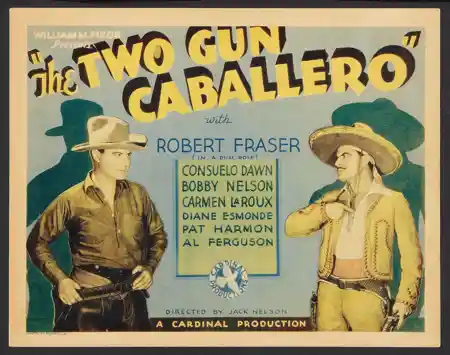
Director's Spotlight: United States
A Deep Dive into the 1931 Vision of Jack Nelson
Exploring the Drama underpinnings of Two-Gun Caballero leads us to the uncompromising vision of Jack Nelson that defines this Drama masterpiece. Melding the raw energy of United States with a global Drama appeal, it echoes the profound changes occurring in United States during that era.
In Two-Gun Caballero, Jack Nelson pushes the boundaries of conventional narrative. The film's unique approach to its subject matter has sparked endless debates and interpretations among cinephiles and critics alike.
In this work, Jack Nelson explores the intersection of Drama and United States cultural identity. The meticulous attention to detail suggests a deep-seated commitment to pushing the boundaries of the medium, ensuring that Two-Gun Caballero remains a relevant topic of study for Drama enthusiasts.
| Cinematography | Deep Focus |
| Soundtrack | Orchestral |
| Editing | Invisible |
| Art Direction | Kitsch |
Visualizing the convergence of Jack Nelson's style and the core Drama narrative.
Filmed before the MPPDA production code was instituted (1934), and this one is filled with dialogue and situations that go beyond innuendo and cut right to the chase on a couple of trails the B-western genre seldom rode. Cowhand Bob Blake visits Sally Thompson and her kid brother Jimmy on their hardscrabble homestead adjoining the Steele Ranch where Bob works. He learns that their father just died, and he plans to see if he can make things easier for them. He rides to the Steele ranch to talk to his boss; he isn't there at the moment, but Mrs. Steele is--and she stands very close to Bob and tells him that they should be better friends. She moves even closer and Bob tells her he needs to tend to his cow-punching and makes a quick exit. Mr. Steele shows up and asks Mrs. Steele to go to town with him, but she declines on the basis she has some house-chores to do, and Mr. Steele also exits. Then Burke, town banker and saloon owner, shows up, and since he and Mrs. Steele are already good friends, he is ready to help her with the chores but Mr. Steele comes back and objects to this, which offends Burke to the point that he shoots Mr. Steele dead. The pair then plants evidence here and there and Mrs. Steele rides to town and tells the sheriff that Bob Blake has just killed her husband. But Blake escapes from jail and heads for Mexico. There, he meets saloon girl Rosita, who also thinks she and Bob should be better friends, but her sweetheart--Lopez the Famous Mexican Bandit--shows up and objects but Rosita explains that she thought Blake was Lopez, because Lopez and Blake look exactly alike and she just thought he was Lopez showing up without his sombrero or his accent. And they do look exactly alike. Some time passes, and Blake comes back to Arizona posing as Lopez, the Famous Mexican Bandit, with the plan of clearing his name and extracting some revenge from Mrs. Steele and Burke. In his absence, Burke has hired a gunman named Butch Devlin to kill Mrs. Blake because he now has his eyes on Sally and the Thompson spread on which he holds the mortgage, and Mrs. Steele has now become a liability and bankers don't care much for liabilities, especially liabilities that can talk and might tell the Sheriff just who knocked off the late Mr. Steele. Lopez and Butch, kindred spirits, meet and become partners, even though Butch didn't know he needed a partner. Burke gives Butch the money to kill Mrs. Steele...Blake/Lopez holds him up and takes it away from him... then gives the money to Sally to payoff the mortgage...she pays Burke...Blake/Lopez holds up Burke and takes the money again...and gives it back to Butch, who, while grateful to get the money back, is somewhat confused as to why Blake/Lopez just didn't let him keep it in the first place. But it is all part of the plan.
Decades after its release, Two-Gun Caballero remains a vital piece of the cinematic puzzle. Its influence can be seen in countless modern works, solidifying Jack Nelson's status as a master of the craft in United States and beyond.