
DbcultAccessing Vault...
Director's Spotlight
Senior Film Conservator
Director's Spotlight: United States
A Deep Dive into the 1920 Vision of Jack Pratt
To understand the modern evolution of United States film, one must first look at Roman Candles and the meticulous attention to detail that Jack Pratt applied to every frame. Reflecting the political and social shifts of the 1920s, it showcases the power of Comedy as a tool for social commentary.
In Roman Candles, Jack Pratt pushes the boundaries of conventional narrative. The film's unique approach to its subject matter has sparked endless debates and interpretations among cinephiles and critics alike.
To fully appreciate Roman Candles, one must consider the cinematic climate of 1920. During this period, United States was undergoing significant artistic shifts, and Jack Pratt was at the forefront of this Comedy movement, often challenging established norms.
| Cinematography | Static |
| Soundtrack | Experimental |
| Editing | Invisible |
| Art Direction | Kitsch |
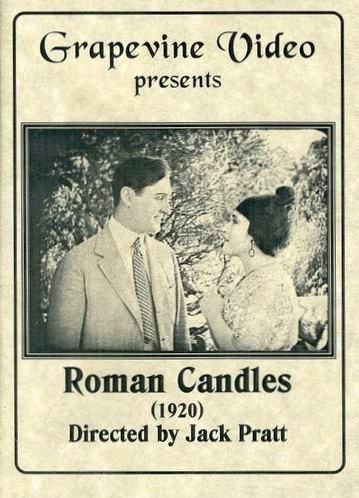
Visualizing the convergence of Jack Pratt's style and the core Comedy narrative.
Sent by his fireworks manufacturer father to South America to peddle the pyrotechnics, John Arnold, Jr., has his last chance to make good. He finds in Santa Maria a just-completed revolution, the celebration for which provides a ready market for his products. Adventure beckons him further, however, when John falls in love with Zorra Gamorra, the daughter of the deposed president. With the aid of his fireworks, John engineers another revolution that re-installs Zorra's father in the presidency. The celebration that follows requires a large order of fireworks from Arnold, Sr. - thus reinstating Arnold, Jr., in his father's good graces.
Decades after its release, Roman Candles remains a vital piece of the cinematic puzzle. Its influence can be seen in countless modern works, solidifying Jack Pratt's status as a master of the craft in United States and beyond.