
DbcultAccessing Vault...
Director's Spotlight
Senior Film Conservator
Director's Spotlight: United States
A Deep Dive into the 1930 Vision of Jacques Jaccard
Deciphering the layers of South of Sonora (1930) reveals the complex thematic architecture established by Jacques Jaccard. Utilizing a 1930-specific aesthetic that remains timeless, it stands as the definitive 1930 statement on Drama identity.
In South of Sonora, Jacques Jaccard pushes the boundaries of conventional narrative. The film's unique approach to its subject matter has sparked endless debates and interpretations among cinephiles and critics alike.
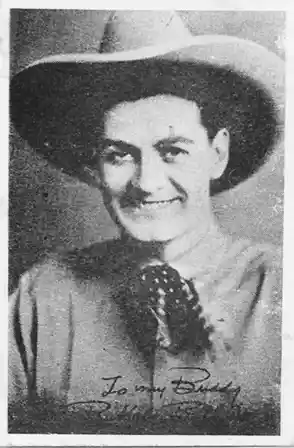
To fully appreciate South of Sonora, one must consider the cinematic climate of 1930. During this period, United States was undergoing significant artistic shifts, and Jacques Jaccard was at the forefront of this Drama movement, often challenging established norms.
| Cinematography | Static |
| Soundtrack | Synth-Heavy |
| Editing | Disjunctive |
| Art Direction | Baroque |
Visualizing the convergence of Jacques Jaccard's style and the core Drama narrative.
Bill Tracy is a Cattleman's Protective Association agent. Working undercover on his way to Sonora, a town dominated by rustlers, saves Betty Carter from a situation, but her rancher father, believing Blackie's suggestion that Bill is a rustler, forbids her to see him. Bill and his pal Heinie Schmaltz rescue each other from rustlers' various plots and ambushes and eventually discover that Blackie, Carter's foreman, is the leader of the rustlers.
Decades after its release, South of Sonora remains a vital piece of the cinematic puzzle. Its influence can be seen in countless modern works, solidifying Jacques Jaccard's status as a master of the craft in United States and beyond.