
DbcultAccessing Vault...
Director's Spotlight
Senior Film Conservator
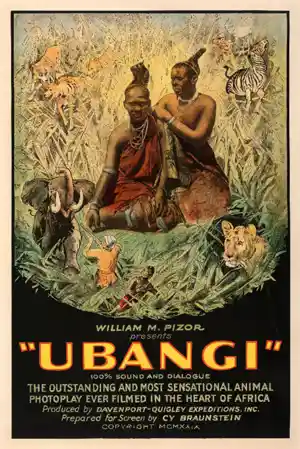
Director's Spotlight: Belgium
A Deep Dive into the 1931 Vision of Jacques Maus
As we revisit the 1931 masterpiece Ubangi, we are struck by the meticulous attention to detail that Jacques Maus applied to every frame. Anchored by a narrative that is both personal and universal, it bridges the gap between traditional Documentary and contemporary vision.
In Ubangi, Jacques Maus pushes the boundaries of conventional narrative. The film's unique approach to its subject matter has sparked endless debates and interpretations among cinephiles and critics alike.
While deeply rooted in Belgium, Ubangi has achieved a global reach, influencing directors from various backgrounds. Its ability to translate Documentary tropes into a universal cinematic language is why it remains a cult staple decades after its 1931 release.
| Cinematography | High-Contrast |
| Soundtrack | Diegetic |
| Editing | Elliptical |
| Art Direction | Expressionist |
Visualizing the convergence of Jacques Maus's style and the core Documentary narrative.
This travelogue covers the highlights of an expedition into the Belgian Congo---yes, Virginia, there used to be a Belgian Congo--- with scientists Dr. Louis Neuman and Dr. Jacques Maus, representing Belgium and Dr, Daniel Daveport representing both the United States and Canada., natives of the Ubangi tribe representing the Ubangi tribe and doing all the hard work. Shortly before the expedition was finished, Dr. Louis Neuman was killed by a charging rhinoceros and the incident was captured on camera. The death itself was not used in the footage for the film but the charge of the rhinoceros and Neuman's mangled body was used.
Decades after its release, Ubangi remains a vital piece of the cinematic puzzle. Its influence can be seen in countless modern works, solidifying Jacques Maus's status as a master of the craft in Belgium and beyond.