
DbcultAccessing Vault...
Director's Spotlight
Senior Film Conservator
Director's Spotlight: United States
A Deep Dive into the 1921 Vision of James Cruze
The brilliance of Crazy to Marry (1921) is inseparable from the visionary mind of its creator, James Cruze. Serving as a mirror to the anxieties of a changing world, it persists as a haunting reminder of our own cinematic history.
In Crazy to Marry, James Cruze pushes the boundaries of conventional narrative. The film's unique approach to its subject matter has sparked endless debates and interpretations among cinephiles and critics alike.
In this work, James Cruze explores the intersection of Comedy and United States cultural identity. The meticulous attention to detail suggests a deep-seated commitment to pushing the boundaries of the medium, ensuring that Crazy to Marry remains a relevant topic of study for Comedy enthusiasts.
| Cinematography | Deep Focus |
| Soundtrack | Minimalist |
| Editing | Disjunctive |
| Art Direction | Baroque |
Visualizing the convergence of James Cruze's style and the core Comedy narrative.
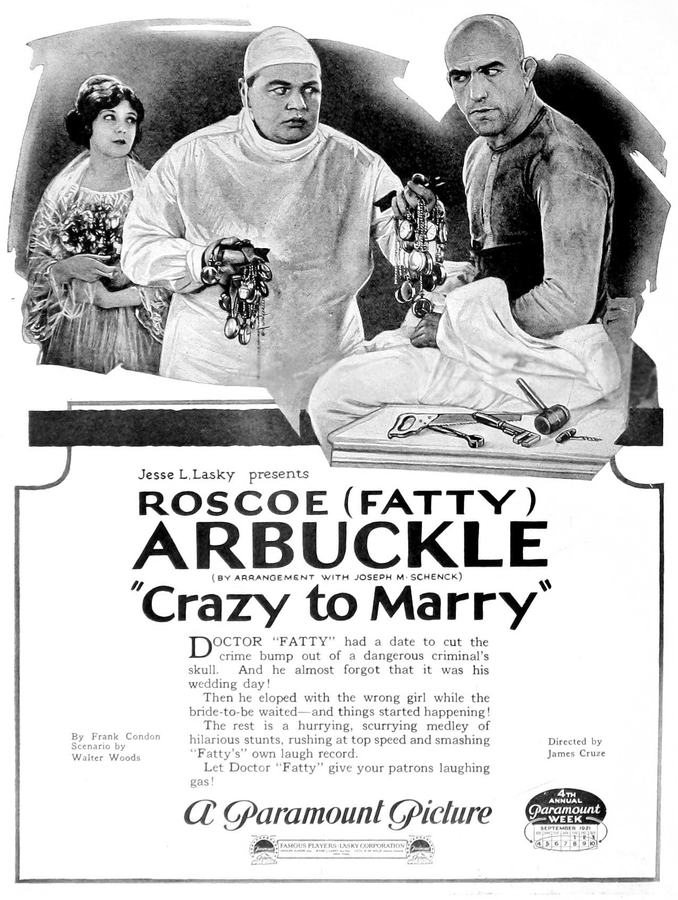
Dr. Hobart Hupp believes he can cure criminals by surgery, and experiments on Dago Red, who has been promised freedom if the operation is successful. Hobart drives to his wedding later that day, unaware that his fiancée, socialite Estrella De Morgan, is actually in love with young Arthur Simmons. Along the way, charming Annabelle Landis mistakes Hobart for her chauffeur, and he drives 300 miles to her home while deciding whether he wants to desert his waiting bride. Upon her arrival, Annabelle is intercepted by her parents, who demand that she marry the man of their choice. Dago Red comes to the doctor's rescue and they escape to an island, accompanied by Annabelle and a minister. There they find Estrella, who has eloped with Arthur. The parents arrive soon after to find Hobart married to Annabelle, and Estrella married to Arthur.
Decades after its release, Crazy to Marry remains a vital piece of the cinematic puzzle. Its influence can be seen in countless modern works, solidifying James Cruze's status as a master of the craft in United States and beyond.