
DbcultAccessing Vault...
Director's Spotlight
Senior Film Conservator
Director's Spotlight: United States
A Deep Dive into the 1922 Vision of James Cruze
In the storied career of James Cruze, The Old Homestead stands as a the provocative questions that James Cruze poses to the United States audience. Elevating the source material through James Cruze's unique vision, it persists as a haunting reminder of our own cinematic history.
In The Old Homestead, James Cruze pushes the boundaries of conventional narrative. The film's unique approach to its subject matter has sparked endless debates and interpretations among cinephiles and critics alike.
In this work, James Cruze explores the intersection of Drama and United States cultural identity. The meticulous attention to detail suggests a deep-seated commitment to pushing the boundaries of the medium, ensuring that The Old Homestead remains a relevant topic of study for Drama enthusiasts.
| Cinematography | Handheld |
| Soundtrack | Diegetic |
| Editing | Elliptical |
| Art Direction | Expressionist |
Visualizing the convergence of James Cruze's style and the core Drama narrative.
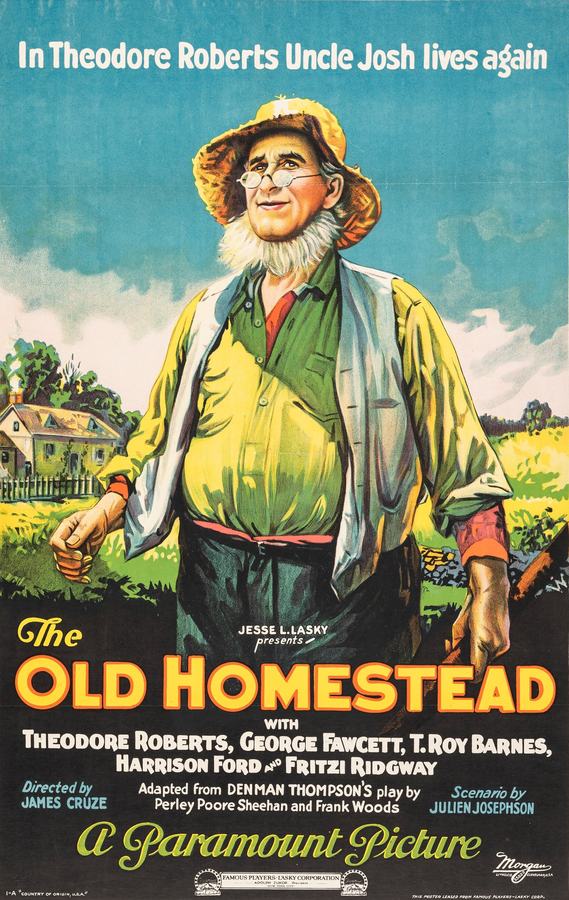
When Lem Holbrook steals some money from his father, Eph Holbrook, to give to Rose, Reuben Whitcomb is accused and jailed. There he meets Happy Jack, and they escape; but Reuben's father, Uncle Josh, is forced to mortgage his farm to Eph to cover the loss. Reuben's sweetheart, Ann, is disturbed by reports that he has gone to meet Rose, but Uncle Josh hears from Happy Jack that he has actually gone to China. Happy Jack goes to search for Reuben while Uncle Josh finds it harder and harder to meet his payments. Just as he is about to sell out, a violent storm levels all of the town except Uncle Josh's farm, prompting Lem to confess to the robbery. Reuben returns, and all are reconciled.
Decades after its release, The Old Homestead remains a vital piece of the cinematic puzzle. Its influence can be seen in countless modern works, solidifying James Cruze's status as a master of the craft in United States and beyond.