
DbcultAccessing Vault...
Director's Spotlight
Senior Film Conservator
Director's Spotlight: United States
A Deep Dive into the 1919 Vision of James Cruze
In the storied career of James Cruze, You're Fired stands as a the provocative questions that James Cruze poses to the United States audience. Elevating the source material through James Cruze's unique vision, it persists as a haunting reminder of our own cinematic history.
In You're Fired, James Cruze pushes the boundaries of conventional narrative. The film's unique approach to its subject matter has sparked endless debates and interpretations among cinephiles and critics alike.
To fully appreciate You're Fired, one must consider the cinematic climate of 1919. During this period, United States was undergoing significant artistic shifts, and James Cruze was at the forefront of this cult movement, often challenging established norms.
| Cinematography | High-Contrast |
| Soundtrack | Experimental |
| Editing | Elliptical |
| Art Direction | Expressionist |
Visualizing the convergence of James Cruze's style and the core cult narrative.
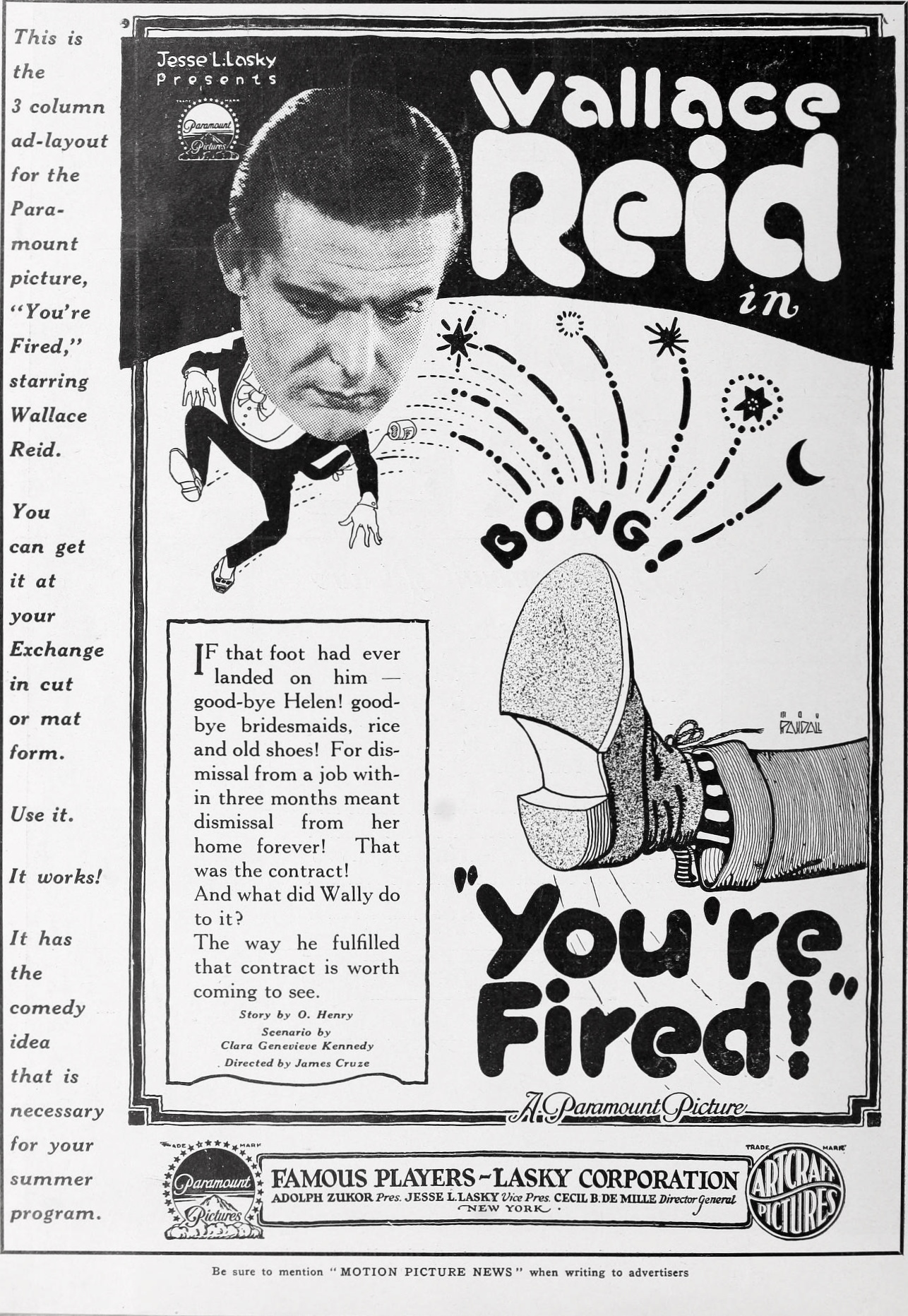
Railroad magnate Gordon Rogers agrees to allow his daughter, Helen, to marry wealthy idler Billy Deering, Jr., but only if the latter can hold the same job for one month. Billy is hired for an array of jobs, including office clerk and xylophone player, but always quits just before being fired. He then finds work in a restaurant where he is required to dress as a knight in armor and pose as a statue. On one occasion, Gordon, Helen, and Billy's romantic rival, Tom, enter the restaurant, and Billy is nearly fired when Helen recognizes him. Meanwhile, Gordon plans to merge one of his railroads with a company that is in a dispute with Tom's uncle, an unprincipled financier. Acting on the promise of a generous cash reward, Tom is determined to steal documents relating to the merger. Billy manages to stay at his job for thirty days, and in the process, exposes Tom's scheme, winning Gordon's consent to marry Helen.
Decades after its release, You're Fired remains a vital piece of the cinematic puzzle. Its influence can be seen in countless modern works, solidifying James Cruze's status as a master of the craft in United States and beyond.