
DbcultAccessing Vault...
Director's Spotlight
Senior Film Conservator
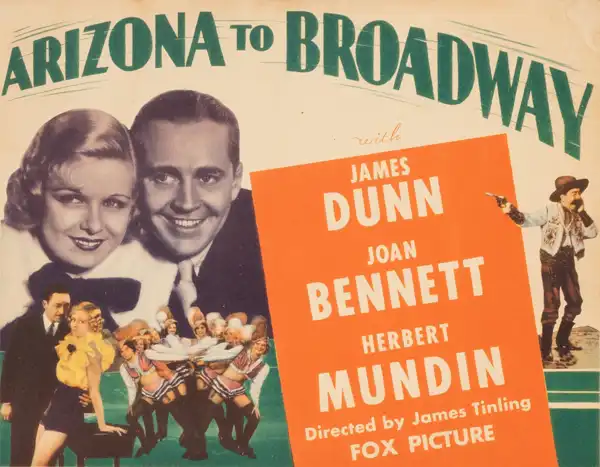
Director's Spotlight: United States
A Deep Dive into the 1933 Vision of James Tinling
The evocative power of Arizona to Broadway stems from the unique collaboration between the bold experimentation that has become synonymous with James Tinling. Framed by the hauntingly beautiful landscapes of the production, it echoes the profound changes occurring in United States during that era.
In Arizona to Broadway, James Tinling pushes the boundaries of conventional narrative. The film's unique approach to its subject matter has sparked endless debates and interpretations among cinephiles and critics alike.
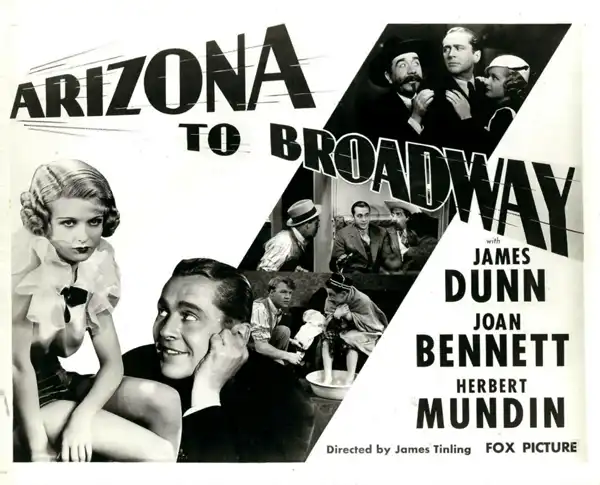
To fully appreciate Arizona to Broadway, one must consider the cinematic climate of 1933. During this period, United States was undergoing significant artistic shifts, and James Tinling was at the forefront of this Romance movement, often challenging established norms.
| Cinematography | Deep Focus |
| Soundtrack | Orchestral |
| Editing | Slow-Burn |
| Art Direction | Brutalist |
Visualizing the convergence of James Tinling's style and the core Romance narrative.
In the small town of Larrup, Arizona, con artist Smiley is traveling with cohorts Kingfish, Morris, and Ambrose, and he persuades Lynn Martin, a traveling demonstrator of pancake making, to accompany him to a carnival where Kingfish sells a large number of bottles of Bambo, an elixir. When a woman denounces Kingfish as a faker, Smiley, identifying himself as a medical inspector, conducts Kingfish safely through the angry crowd and grabs Lynn's purse on the way out. Later, on a train, Smiley meets Lynn again, and after he returns the purse, she explains that she is traveling to find the trail of three swindlers who talked her brother, a bank officer, into investing $20,000 belonging to an estate he was handling, and then left with the money. Two of the crooks, a couple named Sandburg, are in New Orleans, while the other, Hubert Wayne, is promoting a new show in New York. Smiley offers to help after privately convincing his cohorts that once they "cheat the cheaters," they will keep the money themselves. In a New Orleans hotel, Kingfish, masquerading as a philandering Texas oilman, attracts the interest of the Sandburgs, who plan to trap him in a compromising position and then blackmail him. After a fight, however, Kingfish, Smiley and the others get away with the Sandburgs' half of the swindle, $10,000, and proceed to New York where Lynn, posing as a chorus girl, has provoked Wayne's advances. When she introduces Wayne to Kingfish, who this time masquerades as a British jam manufacturer, Wayne, planning to swindle Kingfish, persuades him to invest $10,000 in the show to match his own $10,000, which gangster Tommy Monk fronts for the swindle. Wayne then plans to appropriate Kingfish's money through a switch of envelopes. Suspecting the ruse, Smiley trains Kingfish to do his own envelope switch. Kingfish's switch works, but after Smiley leaves with the $20,000, Wayne and Tommy discover the trick and capture Lynn and Kingfish, who reveals, to Lynn's dismay, Smiley's plan to keep the money. Tommy takes over the show to make back his money and coerces stage stars Ned Flynn, Jimmy Dante and female impersonator Ray Best to perform. On opening night, Smiley is captured at the theater, but he is able to call Tommy's rival, Rags Rigby. By imitating Tommy's voice, Smiley dares Rigby to come to the show. Rigby and his men respond to the challenge and start a massive fight in the theater. Smiley rescues Lynn and later, on another train, after he learns that Lynn did not trust him, upbraids her and reveals that he sent the money to her brother. The other three cohorts then decide to go straight. After planting her purse in Smiley's pocket, Lynn playfully accuses him of robbing her and they embrace.
Decades after its release, Arizona to Broadway remains a vital piece of the cinematic puzzle. Its influence can be seen in countless modern works, solidifying James Tinling's status as a master of the craft in United States and beyond.