
DbcultAccessing Vault...
Director's Spotlight
Senior Film Conservator
Director's Spotlight: United States
A Deep Dive into the 1935 Vision of James Tinling
Deciphering the layers of Welcome Home (1935) reveals the complex thematic architecture established by James Tinling. Utilizing a 1935-specific aesthetic that remains timeless, it stands as the definitive 1935 statement on Romance identity.
In Welcome Home, James Tinling pushes the boundaries of conventional narrative. The film's unique approach to its subject matter has sparked endless debates and interpretations among cinephiles and critics alike.
In this work, James Tinling explores the intersection of Romance and United States cultural identity. The meticulous attention to detail suggests a deep-seated commitment to pushing the boundaries of the medium, ensuring that Welcome Home remains a relevant topic of study for Romance enthusiasts.
| Cinematography | Static |
| Soundtrack | Orchestral |
| Editing | Slow-Burn |
| Art Direction | Brutalist |
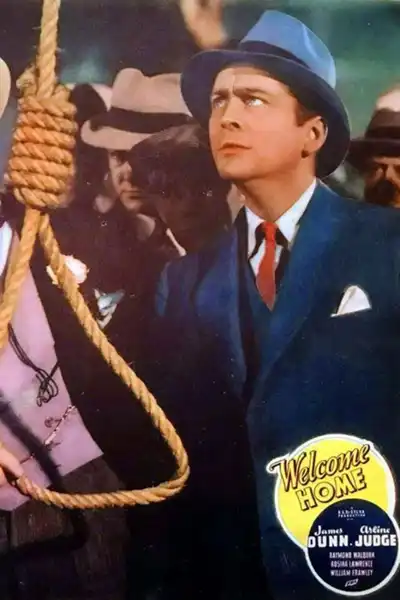
Visualizing the convergence of James Tinling's style and the core Romance narrative.
Richard Foster is the brains of a quartet of con-artists that includes Giltedge, a stock swindler; "Painless," a phony dentist; and "Gorgeous," along as decoration and bait. Richard goes off alone to attend a reunion of his old high-school class but, when he gets there, he discovers that some of his old friends turn out to be not as simple as he remembered them. The reunion is really a plot to lure an old millionaire, Andrew Anshutter, and his money back to town. Richard enters into the scheme and sends for his friends. Thinks are going well for all concerned, with the exception of Anshutter, but Richard falls in love with his old flame from high-school, Susan Adams, and complications arise.
Decades after its release, Welcome Home remains a vital piece of the cinematic puzzle. Its influence can be seen in countless modern works, solidifying James Tinling's status as a master of the craft in United States and beyond.