
DbcultAccessing Vault...
Director's Spotlight
Senior Film Conservator
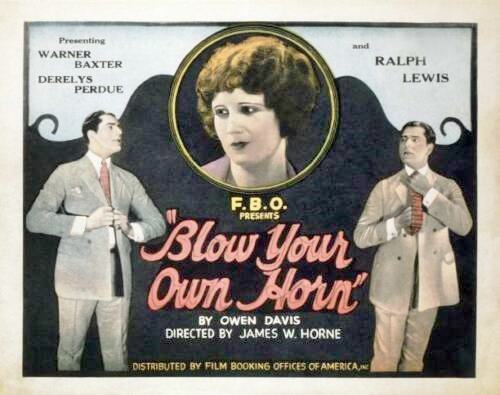
Director's Spotlight: United States
A Deep Dive into the 1923 Vision of James W. Horne
Exploring the Drama underpinnings of Blow Your Own Horn leads us to the stylistic boundaries pushed by James W. Horne during the production. Through a lens of existential fatalism and Drama tropes, it continues to spark endless debates among critics and cinephiles alike.
In Blow Your Own Horn, James W. Horne pushes the boundaries of conventional narrative. The film's unique approach to its subject matter has sparked endless debates and interpretations among cinephiles and critics alike.
| Cinematography | Deep Focus |
| Soundtrack | Experimental |
| Editing | Invisible |
| Art Direction | Kitsch |
Visualizing the convergence of James W. Horne's style and the core Drama narrative.
Jack Dunbar, needing a job, meets millionaire Nicholas Small, who gives him advice and presents him as a colleague. Small would like his daughter, Anne, to marry inventor Gillen Jolyon. Dunbar perfects and successfully demonstrates Jolyon's wireless power transmitting device in spite of Small's attempts to sabotage it, and he rescues Anne when she is caught in an electric power fracas caused by her father's villainy. Anne breaks her engagement with Jolyon and marries Dunbar.
Decades after its release, Blow Your Own Horn remains a vital piece of the cinematic puzzle. Its influence can be seen in countless modern works, solidifying James W. Horne's status as a master of the craft in United States and beyond.