
DbcultAccessing Vault...
Director's Spotlight
Senior Film Conservator
Director's Spotlight: United States
A Deep Dive into the 1920 Vision of James W. Horne
In the storied career of James W. Horne, Occasionally Yours stands as a the provocative questions that James W. Horne poses to the United States audience. Elevating the source material through James W. Horne's unique vision, it persists as a haunting reminder of our own cinematic history.
In Occasionally Yours, James W. Horne pushes the boundaries of conventional narrative. The film's unique approach to its subject matter has sparked endless debates and interpretations among cinephiles and critics alike.
While deeply rooted in United States, Occasionally Yours has achieved a global reach, influencing directors from various backgrounds. Its ability to translate Drama tropes into a universal cinematic language is why it remains a cult staple decades after its 1920 release.
| Cinematography | Noir-Inspired |
| Soundtrack | Diegetic |
| Editing | Rhythmic |
| Art Direction | Naturalist |
Visualizing the convergence of James W. Horne's style and the core Drama narrative.
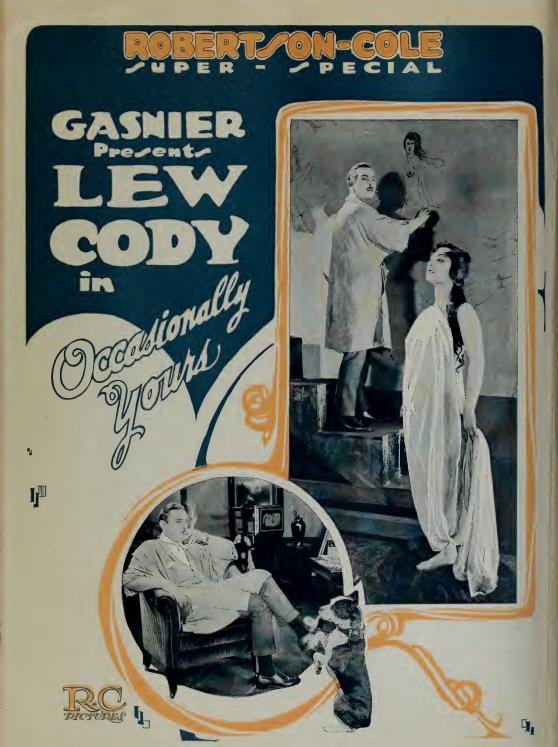
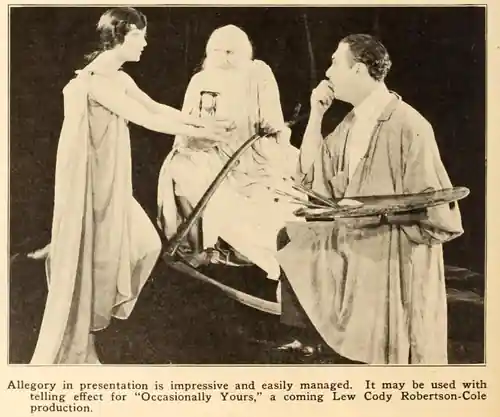
When Bruce Sands, a dilettante artist with a history of amorous peccadilloes, discovers that his latest flame Bunny Winston wants to marry him, he seeks refuge at his friend John Woodward's country home, unaware that Woodward has asked Bunny to marry him. Bunny follows the artist to Woodward's estate, where Bruce begins a flirtation with Woodward's daughter Audrey. After Audrey is injured in a fall from a horse, Bruce promises to marry her, thinking that she is on her deathbed. Upon hearing the news, Bunny assumes that Bruce will now be a member of the family and so marries Woodward. When Audrey recovers, the engagement is broken, Bruce returns to town, and Bunny follows. Bruce rejects Bunny and begins his campaign for his next victim, leaving Audrey and her father to console each other.
Decades after its release, Occasionally Yours remains a vital piece of the cinematic puzzle. Its influence can be seen in countless modern works, solidifying James W. Horne's status as a master of the craft in United States and beyond.