
DbcultAccessing Vault...
Director's Spotlight
Senior Film Conservator
Director's Spotlight: United States
A Deep Dive into the 1919 Vision of James Young
Analyzing A Rogue's Romance (1919) requires a deep dive into the defining moment in cult history that James Young helped create. Defining a new era of United States artistic expression, it transcends regional boundaries to tell a universal story.
In A Rogue's Romance, James Young pushes the boundaries of conventional narrative. The film's unique approach to its subject matter has sparked endless debates and interpretations among cinephiles and critics alike.
To fully appreciate A Rogue's Romance, one must consider the cinematic climate of 1919. During this period, United States was undergoing significant artistic shifts, and James Young was at the forefront of this cult movement, often challenging established norms.
| Cinematography | High-Contrast |
| Soundtrack | Diegetic |
| Editing | Elliptical |
| Art Direction | Expressionist |
Visualizing the convergence of James Young's style and the core cult narrative.
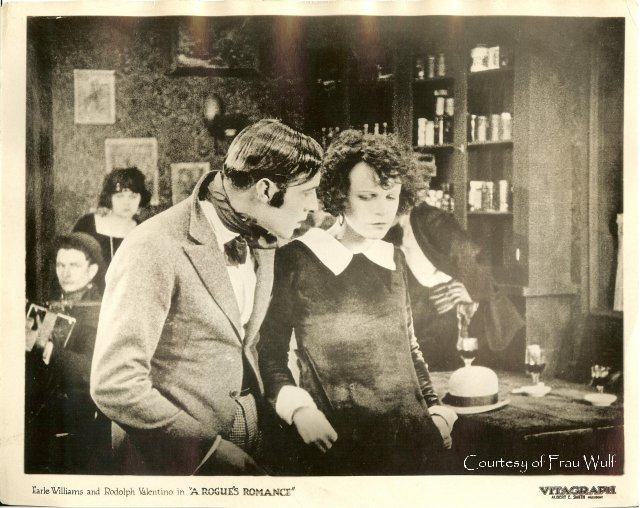
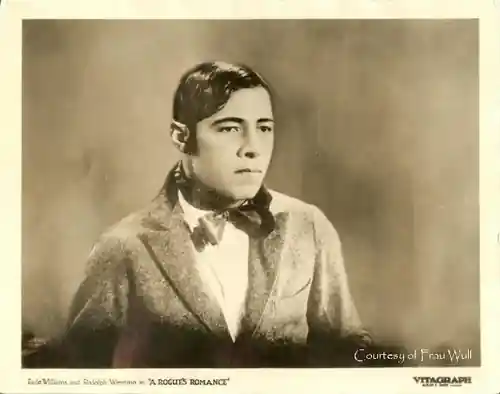
A welcome guest of the French aristocracy, Monsieur Picard having been awarded the Croix De Guerre, is also a master thief who baffles the Parisian police. One night, while Picard watches an Apache dance, he learns that one of his three adopted children is seriously ill. When his car breaks down, Picard politely forces Helen Deprenay to loan him her auto, and leaves his cross as security. The next day, the police pursue Picard to the Deprenay home where the prefect warns Helen about Picard. Helen writes to the entreating Picard, and refuses to see him until he proves himself of worth to society. Disguised as Scotland Yard agent Armand DuBois, Picard is present at the Deprenay home when a necklace is stolen. After Helen covers for him, Picard catches the thief in an attempt to swindle the entire community in a stock market scheme. He informs the police that Picard no longer exists, and escapes with Helen to a new life.
Decades after its release, A Rogue's Romance remains a vital piece of the cinematic puzzle. Its influence can be seen in countless modern works, solidifying James Young's status as a master of the craft in United States and beyond.