
DbcultAccessing Vault...
Director's Spotlight
Senior Film Conservator
Director's Spotlight: United States
A Deep Dive into the 1915 Vision of James Young
The 1915 release of The Deep Purple marked a significant moment for the stylistic boundaries pushed by James Young during the production. In the context of United States's rich cinematic history, it invites us to question our own perceptions of cult narratives.
In The Deep Purple, James Young pushes the boundaries of conventional narrative. The film's unique approach to its subject matter has sparked endless debates and interpretations among cinephiles and critics alike.
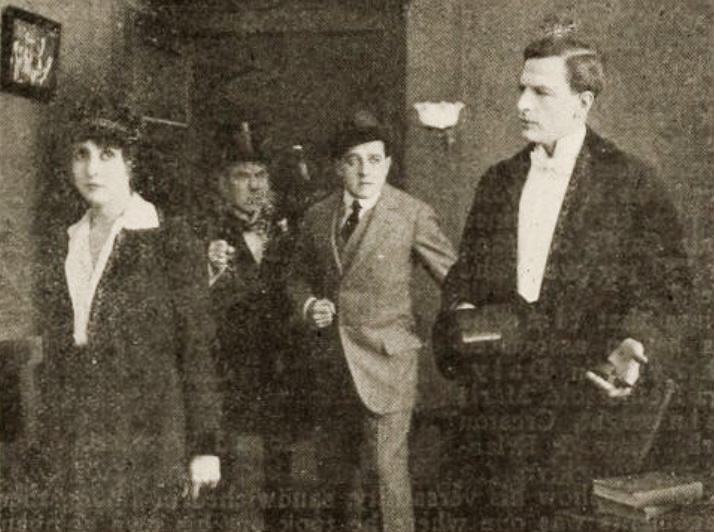
To fully appreciate The Deep Purple, one must consider the cinematic climate of 1915. During this period, United States was undergoing significant artistic shifts, and James Young was at the forefront of this cult movement, often challenging established norms.
| Cinematography | Deep Focus |
| Soundtrack | Diegetic |
| Editing | Rhythmic |
| Art Direction | Naturalist |
Visualizing the convergence of James Young's style and the core cult narrative.
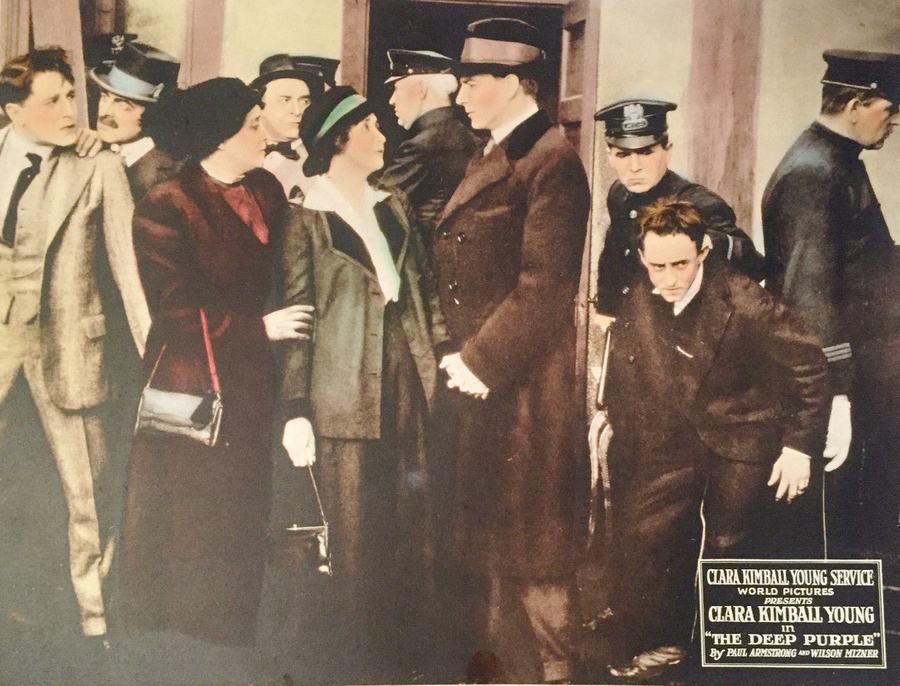
Doris Moore is the daughter of a minister living at a small country town a few hours' distance from New York. She helps her father in his work among his congregation, teaches in the Sunday school and plays the wheezy old organ in the church. The household is thrown into a mild state of excitement on receipt of a letter purporting to come from an organ supply company in New York, but which in reality is from a band of crooks who use this as one of the fraudulent schemes whereby they obtain money from the unwary. The letter offers to supply a beautiful pipe organ on receipt of an installment of one third of the cost, the balance to be paid on time. The matter is laid before the deacons and they decide to consider the offer. The minister writes to the organ company and the chief of the crooks, Harry Leland, a handsome, dashing man of the world, arrives and explains in glowing terms the advantages of the organ. While waiting for the deacons to collect the first installment of two hundred dollars, Leland pays considerable attention to Doris, who is much fascinated by him, representing as he does a totally different type of man to what she has been used to. In the meantime, the crooks in New York have received information from out west that Will Lake, a young eastern college man who in two years has made a fortune of fifty thousand dollars, is returning east, and will stay in New York for a week. They decide to try to blackmail Lake on his arrival and at once communicate with Leland, who replies that he will return immediately as soon as he gets the organ money. Leland has become attracted by the freshness and beauty of Doris and decides to lure her to New York and then make use of her in the crooks' nefarious schemes. He protests violent love for her and proposes marriage, and Doris consents. Immediately after receiving the two hundred dollars from the deacons, he approaches Doris as she leaves Sunday school and with well-simulated despair tells her he has received very bad news and that he is threatened with ruin and begs her to go to New York with him as she alone can save him. After much persuasion, Doris' scruples are overcome and she returns with Leland who takes her to the boarding house run by 'Frisco Kate, a house which is used by the crooks as a meeting place. It is decided to have Doris act as a decoy and to get Lake to visit a flat which has been prepared beforehand. She is therefore told that Lake has defrauded her lover Leland of a considerable sum of money and that if he could be seen, things might be arranged satisfactorily. She is told to speak to Lake, who will be pointed out to her in the hotel, and tell him that her mother who has friends in Goldfield wishes to ask his advice about mining stock. The plan succeeds and Lake unsuspectingly goes to the flat and while alone with Doris, Leland with two other crooks rush in and accuse him of being in a compromising position with Doris whom he calls his wife, much to her amazement, and says that Lake must pay in money to avoid scandal. Lake intuitively feels that Doris is innocent and refuses. A furious fight ensues in which Lake is knocked unconscious, robbed of all his money and locked in the room, the crooks making good their escape with Doris, whom they take to their hiding place. Their plans are defeated, however, by one of their own band, Laylock and 'Frisco Kate, who, hardened crooks though they have been, refused to be parties to the dragging down of an innocent girl. They release Lake and go along with him to the police and lead a raid on the crooks' hiding place who are all captured and receive their just deserts. Doris meets her father at the police station, he having come to New York to trace her. Lake, who is much interested in them, invites them to his hotel to meet his mother and sister. There is a pretty ending to the story when Will Lake, who to celebrate his good fortune and has made the church a present of a beautiful organ, pays a visit to Doris and her father, and a love romance, the seeds of which were set when she innocently acted as a decoy, is happily consummated.
Decades after its release, The Deep Purple remains a vital piece of the cinematic puzzle. Its influence can be seen in countless modern works, solidifying James Young's status as a master of the craft in United States and beyond.