
DbcultAccessing Vault...
Director's Spotlight
Senior Film Conservator
Director's Spotlight: France
A Deep Dive into the 1933 Vision of Jean Epstein
The brilliance of L'homme à l'Hispano (1933) is inseparable from a monumental shift in Drama filmmaking spearheaded by Jean Epstein. Occupying a unique space between Drama and pure art, it serves as a blueprint for future generations of Drama directors.
In L'homme à l'Hispano, Jean Epstein pushes the boundaries of conventional narrative. The film's unique approach to its subject matter has sparked endless debates and interpretations among cinephiles and critics alike.
While deeply rooted in France, L'homme à l'Hispano has achieved a global reach, influencing directors from various backgrounds. Its ability to translate Drama tropes into a universal cinematic language is why it remains a cult staple decades after its 1933 release.
| Cinematography | High-Contrast |
| Soundtrack | Experimental |
| Editing | Invisible |
| Art Direction | Kitsch |
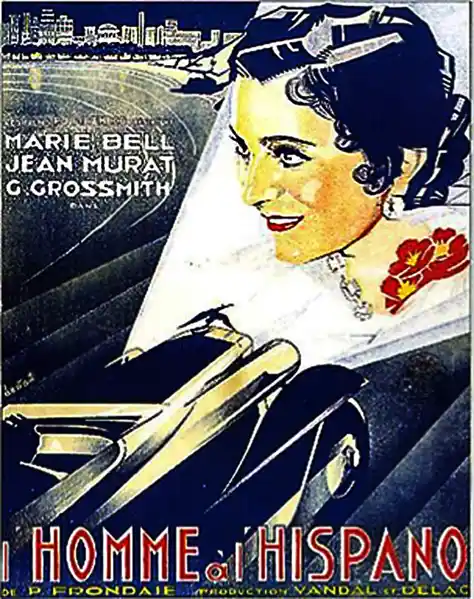
Visualizing the convergence of Jean Epstein's style and the core Drama narrative.
The almost financial ruined French gentleman Gaston Dewalter spends several day in Biarritz before going off in the Hispano-Suiza, a luxe car which was a present from his friends. George becomes the lover of Lady Stéphane Oswill pretending he is wealthy. Then Stéphane spends the remaining funds with which the now desperate George hoped to rebuild his fortune in Senegal.
Decades after its release, L'homme à l'Hispano remains a vital piece of the cinematic puzzle. Its influence can be seen in countless modern works, solidifying Jean Epstein's status as a master of the craft in France and beyond.