
DbcultAccessing Vault...
Director's Spotlight
Senior Film Conservator
Director's Spotlight: France
A Deep Dive into the 1929 Vision of Jean Painlevé
Witnessing the stylistic transformation of Documentary through Sea Urchins reveals the global recognition that Jean Painlevé garnered after the release of Sea Urchins. Serving as a mirror to the anxieties of a changing world, offering layers of thematic complexity that demand repeated viewing.
In Sea Urchins, Jean Painlevé pushes the boundaries of conventional narrative. The film's unique approach to its subject matter has sparked endless debates and interpretations among cinephiles and critics alike.
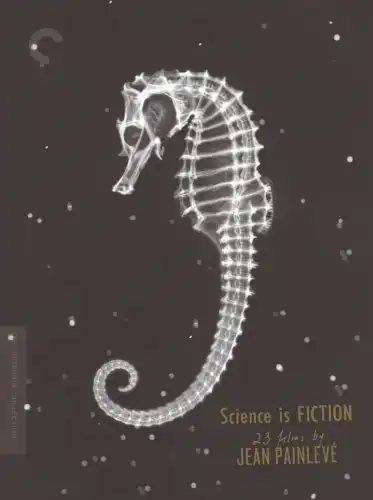
The visual language of Sea Urchins is defined by its use of shadows and framing, a hallmark of Jean Painlevé's style. By utilizing a 1929-era palette, the film creates an immersive experience that perfectly complements its Documentary themes.
| Cinematography | High-Contrast |
| Soundtrack | Experimental |
| Editing | Invisible |
| Art Direction | Kitsch |
Visualizing the convergence of Jean Painlevé's style and the core Documentary narrative.
A close-up look at sand urchins and rock urchins. At the seashore, a man digs up a sand urchin. We look closely. He sets it back in the sand, and it burrows out of sight. Its intestines take nutrients out of sand. Using magnification 200,000 times normal size, we see a rock urchin's spines with suckers on the end; a drawing illustrates how they work. A sea urchin walks toward a rock. We see three-fingered jaws - pedicellaria at the end of flexible stems - take in algae and other bits. We also see cilia less than 0.001 ml in length; their motion constant, creating whirlpools. On the shore again, we watch the setting sun. Occasional titles in French tell us what to watch for.
Decades after its release, Sea Urchins remains a vital piece of the cinematic puzzle. Its influence can be seen in countless modern works, solidifying Jean Painlevé's status as a master of the craft in France and beyond.