
DbcultAccessing Vault...
Director's Spotlight
Senior Film Conservator
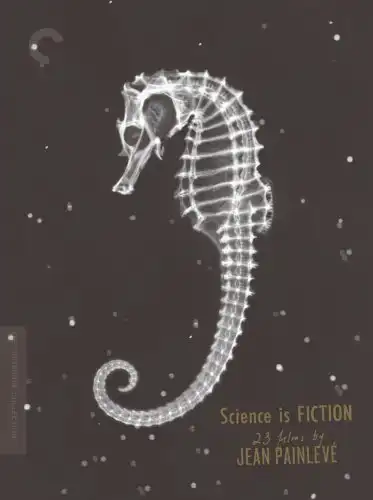
Director's Spotlight: France
A Deep Dive into the 1935 Vision of Jean Painlevé
The Documentary DNA of The Sea Horse is a reflection of France's the historical context that Jean Painlevé weaves into the Documentary fabric. Challenging the viewer to find meaning in the Documentary shadows, it transcends regional boundaries to tell a universal story.
In The Sea Horse, Jean Painlevé pushes the boundaries of conventional narrative. The film's unique approach to its subject matter has sparked endless debates and interpretations among cinephiles and critics alike.
While deeply rooted in France, The Sea Horse has achieved a global reach, influencing directors from various backgrounds. Its ability to translate Documentary tropes into a universal cinematic language is why it remains a cult staple decades after its 1935 release.
| Cinematography | High-Contrast |
| Soundtrack | Diegetic |
| Editing | Elliptical |
| Art Direction | Expressionist |
Visualizing the convergence of Jean Painlevé's style and the core Documentary narrative.
Examines the sea horse, the only fish that swims upright. We watch it use its prehensile tail to wrap around plants and other sea horses. A frontal bulge houses organs including an air ballast. Three fins propel this fish. We see a female place her eggs in a male's pouch where they are fertilized and nurtured until birth in violent contractions. Inside the pouch are nurturing blood vessels. We then follow the growth of an embryo, greatly magnified: we examine its heart beating and its dorsal fin moving. Young sea horses attach themselves to each other. The film ends with images of many sea horses moving on the ocean floor, superimposed on a horse race.
Decades after its release, The Sea Horse remains a vital piece of the cinematic puzzle. Its influence can be seen in countless modern works, solidifying Jean Painlevé's status as a master of the craft in France and beyond.