
DbcultAccessing Vault...
Director's Spotlight
Senior Film Conservator
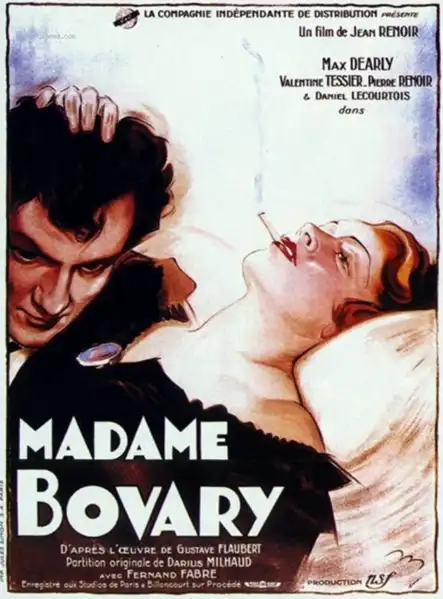
Director's Spotlight: France
A Deep Dive into the 1934 Vision of Jean Renoir
The brilliance of Madame Bovary (1934) is inseparable from a monumental shift in Drama filmmaking spearheaded by Jean Renoir. Occupying a unique space between Drama and pure art, it serves as a blueprint for future generations of Drama directors.
In Madame Bovary, Jean Renoir pushes the boundaries of conventional narrative. The film's unique approach to its subject matter has sparked endless debates and interpretations among cinephiles and critics alike.
The visual language of Madame Bovary is defined by its use of shadows and framing, a hallmark of Jean Renoir's style. By utilizing a 1934-era palette, the film creates an immersive experience that perfectly complements its Drama themes.
| Cinematography | Deep Focus |
| Soundtrack | Experimental |
| Editing | Elliptical |
| Art Direction | Expressionist |
Visualizing the convergence of Jean Renoir's style and the core Drama narrative.
Soon after the death of his first wife (whose dowry was inadequate), Charles Bovary, a country doctor in Normandy, marries Emma Rouault, who is well-endowed in every sense. In her new home, Emma finds conflict with her mother-in-law, a husband uninterested in the social whirl, and general discontentment; thereby proving an easy conquest for philanderer Rodolphe. Other lovers follow. Does tragedy await?
Decades after its release, Madame Bovary remains a vital piece of the cinematic puzzle. Its influence can be seen in countless modern works, solidifying Jean Renoir's status as a master of the craft in France and beyond.