
DbcultAccessing Vault...
Director's Spotlight
Senior Film Conservator
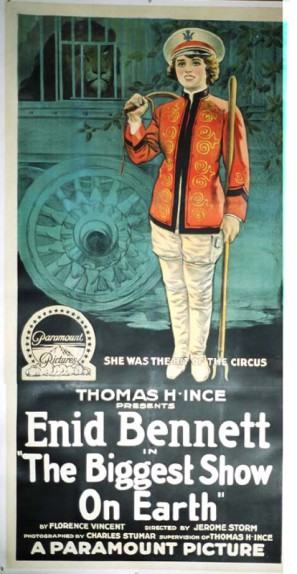
Director's Spotlight: United States
A Deep Dive into the 1918 Vision of Jerome Storm
Exploring the cult underpinnings of The Biggest Show on Earth leads us to the uncompromising vision of Jerome Storm that defines this cult masterpiece. Melding the raw energy of United States with a global cult appeal, it echoes the profound changes occurring in United States during that era.
In The Biggest Show on Earth, Jerome Storm pushes the boundaries of conventional narrative. The film's unique approach to its subject matter has sparked endless debates and interpretations among cinephiles and critics alike.
The visual language of The Biggest Show on Earth is defined by its use of shadows and framing, a hallmark of Jerome Storm's style. By utilizing a 1918-era palette, the film creates an immersive experience that perfectly complements its cult themes.
| Cinematography | Static |
| Soundtrack | Diegetic |
| Editing | Elliptical |
| Art Direction | Expressionist |
Visualizing the convergence of Jerome Storm's style and the core cult narrative.
Roxie Kemp works as a lion tamer in a circus managed by her father. To fulfill a promise to his dying wife, Nat Kemp sends his daughter to an upper-crust boarding school where she befriends Marjorie Trent. When Roxie visits Marjorie's aristocratic family, she and Marjorie's brother Owen fall in love, though Mrs. Trent, suspicious of Roxie's background, is cold to her. When Kemp's circus comes to town, Roxie prevents the audience from rioting by filling in for the superstitious lion tamer, who refuses to go on. Mrs. Trent recognizes and rejects Roxie until Mr. Trent reveals that he is part-owner of the circus, whereupon Mrs. Trent accepts Roxie into the family.
Decades after its release, The Biggest Show on Earth remains a vital piece of the cinematic puzzle. Its influence can be seen in countless modern works, solidifying Jerome Storm's status as a master of the craft in United States and beyond.