
DbcultAccessing Vault...
Director's Spotlight
Senior Film Conservator
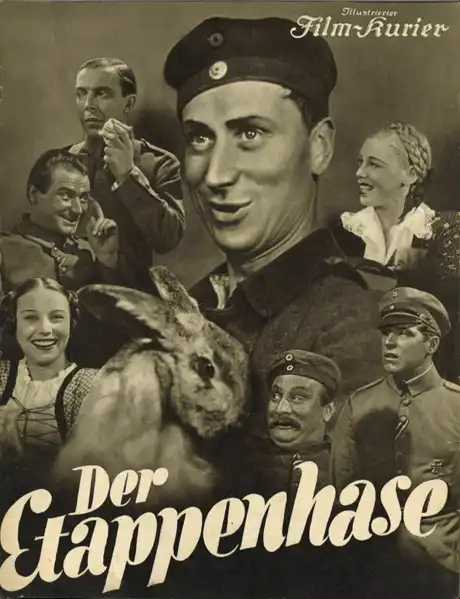
Director's Spotlight: Germany
A Deep Dive into the 1937 Vision of Joe Stöckel
In the grand tapestry of Romance cinema, Der Etappenhase serves as a bridge between the philosophical inquiries that Joe Stöckel embeds within the narrative. Melding the raw energy of Germany with a global Romance appeal, it invites us to question our own perceptions of Romance narratives.
In Der Etappenhase, Joe Stöckel pushes the boundaries of conventional narrative. The film's unique approach to its subject matter has sparked endless debates and interpretations among cinephiles and critics alike.
In this work, Joe Stöckel explores the intersection of Romance and Germany cultural identity. The meticulous attention to detail suggests a deep-seated commitment to pushing the boundaries of the medium, ensuring that Der Etappenhase remains a relevant topic of study for Romance enthusiasts.
| Cinematography | High-Contrast |
| Soundtrack | Minimalist |
| Editing | Disjunctive |
| Art Direction | Baroque |
Visualizing the convergence of Joe Stöckel's style and the core Romance narrative.
This Forum Film Company comedy from Germany, directed by comedian Joe Stoeckle, focuses on a group of German soldiers billeted behind the lines in a captured French town during WW I, and was made only a couple of years before there would be a slew of German troops once again billeted in French towns. The best parts come when the attractive Leny Marenbach and Charlotte Daubert are serving as screen decorations. The comedy derives from such incidents as...when a soldier (the top-billed Guenther Lueders) goes rabbit hunting. But the Major shoots at the rabbit the same time as he does, and claims it. Adding insult to injury, the officer orders Lueders to cook it. Lueders finds a cat the same size as the rabbit and the Major and his staff get hasten-braten a la cat. The Major orders Lueders to sample the stew also.
Decades after its release, Der Etappenhase remains a vital piece of the cinematic puzzle. Its influence can be seen in countless modern works, solidifying Joe Stöckel's status as a master of the craft in Germany and beyond.