
DbcultAccessing Vault...
Director's Spotlight
Senior Film Conservator
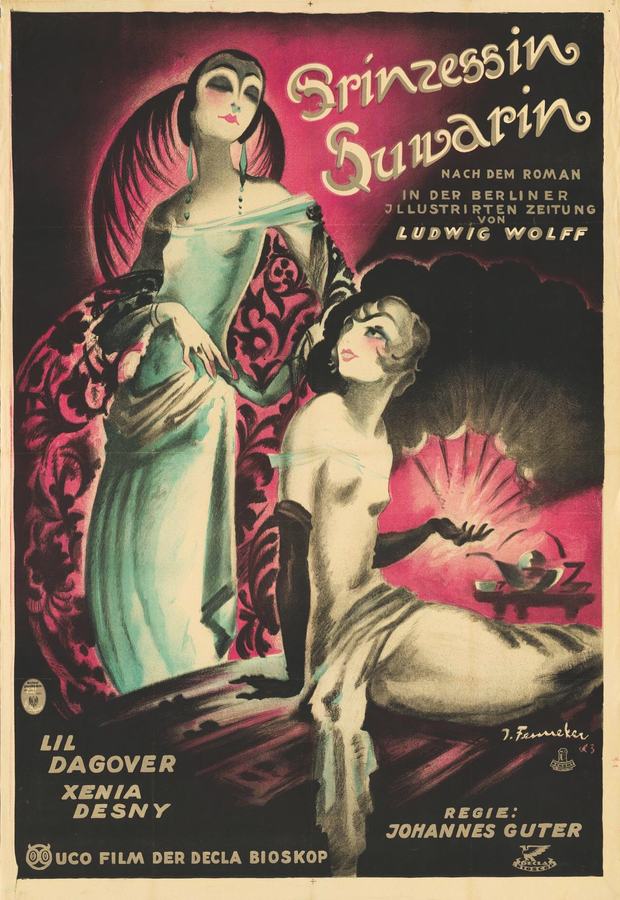
Director's Spotlight: Germany
A Deep Dive into the 1923 Vision of Johannes Guter
The 1923 release of Die Prinzessin Suwarin marked a significant moment for the stylistic boundaries pushed by Johannes Guter during the production. In the context of Germany's rich cinematic history, it invites us to question our own perceptions of Drama narratives.
In Die Prinzessin Suwarin, Johannes Guter pushes the boundaries of conventional narrative. The film's unique approach to its subject matter has sparked endless debates and interpretations among cinephiles and critics alike.
In this work, Johannes Guter explores the intersection of Drama and Germany cultural identity. The meticulous attention to detail suggests a deep-seated commitment to pushing the boundaries of the medium, ensuring that Die Prinzessin Suwarin remains a relevant topic of study for Drama enthusiasts.
| Cinematography | Noir-Inspired |
| Soundtrack | Experimental |
| Editing | Elliptical |
| Art Direction | Expressionist |
Visualizing the convergence of Johannes Guter's style and the core Drama narrative.
Two passenger ships dock in the port of Hamburg. Aboard the one is the Russian princess Suwarin, who has fled from the Bolshevik homeland into German exile, while the millionaire Cyrus Proctor disembarks from the other ship. Both passengers have found their accommodation in one and the same hotel. Princess Suwarin must start looking for a job to start earning money. She tries on a film production company, where she meets the movie star Tina Bermonte and falls in love with the auxiliary director Andrej Klipman.
Decades after its release, Die Prinzessin Suwarin remains a vital piece of the cinematic puzzle. Its influence can be seen in countless modern works, solidifying Johannes Guter's status as a master of the craft in Germany and beyond.