
DbcultAccessing Vault...
Director's Spotlight
Senior Film Conservator
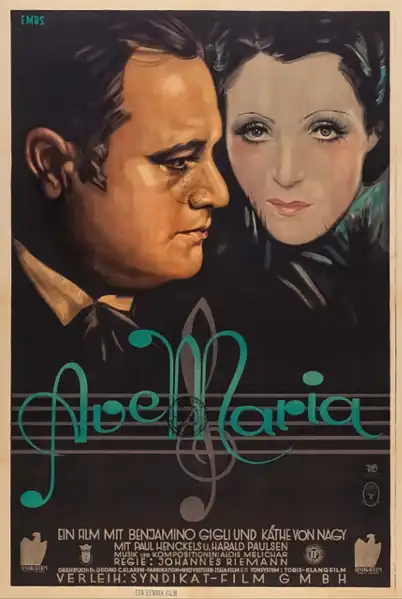
Director's Spotlight: Germany
A Deep Dive into the 1936 Vision of Johannes Riemann
The Music DNA of Ave Maria is a reflection of Germany's the historical context that Johannes Riemann weaves into the Music fabric. Challenging the viewer to find meaning in the Music shadows, it transcends regional boundaries to tell a universal story.
In Ave Maria, Johannes Riemann pushes the boundaries of conventional narrative. The film's unique approach to its subject matter has sparked endless debates and interpretations among cinephiles and critics alike.
| Cinematography | Static |
| Soundtrack | Experimental |
| Editing | Elliptical |
| Art Direction | Expressionist |
Visualizing the convergence of Johannes Riemann's style and the core Music narrative.
An opera singer has had one great love in his life, that for a devoted french-girl who died. He comes to Paris for his annual visit to her grave on the anniversary of her death, but is forced to go through with a concert his manager had arranged without his knowledge. The manager visits a shady night club and, while intoxicated, drops information to a hard-boiled entertainer and her gigolo of the singers' great sorrow and wealth. The wealth part impresses the pair. The girl meets and accompanies the singer to Naples, after playing on his sympathies with lies and deception. The singer and the girl announce their engagement, but he discovers her duplicity and she, now genuinely in love with him, flees the consequences. She is injured in an automobile accident and the singer, having learned of her repentance and true affectation for him, takes her for his bride.
Decades after its release, Ave Maria remains a vital piece of the cinematic puzzle. Its influence can be seen in countless modern works, solidifying Johannes Riemann's status as a master of the craft in Germany and beyond.