
DbcultAccessing Vault...
Director's Spotlight
Senior Film Conservator
Director's Spotlight: United States
A Deep Dive into the 1935 Vision of John Boland
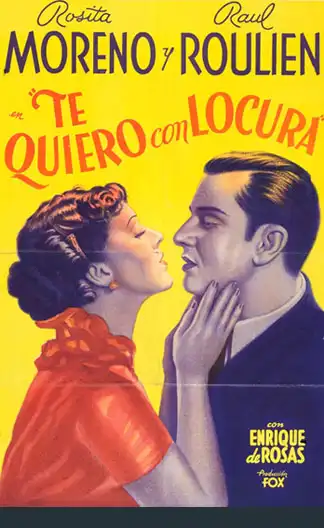
As we revisit the 1935 masterpiece Te quiero con locura, we are struck by the atmospheric immersion that John Boland achieves throughout Te quiero con locura. Exploring the nuances of the human condition with Comedy flair, it solidifies John Boland's reputation as a master of the craft.
In Te quiero con locura, John Boland pushes the boundaries of conventional narrative. The film's unique approach to its subject matter has sparked endless debates and interpretations among cinephiles and critics alike.
The visual language of Te quiero con locura is defined by its use of shadows and framing, a hallmark of John Boland's style. By utilizing a 1935-era palette, the film creates an immersive experience that perfectly complements its Comedy themes.
| Cinematography | Handheld |
| Soundtrack | Diegetic |
| Editing | Elliptical |
| Art Direction | Expressionist |
Visualizing the convergence of John Boland's style and the core Comedy narrative.
Betrothed to her bilious and neurasthenic cousin, Willy McRay, Norma Carter feigns insanity before her rich aunt and uncle in order to be committed to Dr. Nutts's sanitarium so that she can escape the union. Alberto Foster, another patient, pretends to be insane in order to avoid the wrath of his former mistress' husband, who has vowed to kill him as soon as Alberto is well enough to be a worthy opponent. Alberto meets Norma and invites her for drinks on his parked airplane, as alcohol is not permitted on the sanitarium grounds. Dr. Nutts learns of Alberto's flirtations and tells Norma that the clinic is filled with spies looking for people who are not really insane. Fearing that Alberto may be a spy, Norma behaves like a lunatic for him, but he is more charmed than ever by her madcap behavior and sneaks her out of the sanitarium for an evening on the town. The couple go to a cabaret in New York, and when Nutts discovers their absence, he pursues them with Harry, a sanitarium attendant and friend of Alberto. Hugo Rock, the jealous husband, appears at the club, and Alberto disguises himself with a false mustache. When the mustache falls off while he and Norma dance, Hugo screams and chases Alberto. Nutts arrives and joins the chase, and the couple are later found by police at Alberto's flat. At a court hearing, the greedy Dr. Nutts declares that Norma needs permanent care at his clinic and that Alberto is perfectly sane. The judge decides to have the couple observed by state "alienists" to determine their sanity or insanity. The alienists, who watch Alberto and Norma on a closed-circuit television monitor, report that they suffer from "incandescent love" and are quiet and harmless, but should be isolated. The cabaret owner, who wants restitution for his ruined business, Dr. Nutts, Norma's uncle, Harry and Hugo await the verdict, and when they begin to argue, the alienists accidentally change the channel and observe the group, whom they diagnose as furiously mad. The cabaret owner, Norma's uncle, and Hugo are then all committed. Later, Norma and Alberto, in a peaceful sanitarium-like setting, sing with their brood of lovely children about the sanity of insanity in a world filled with war and fascism.
Decades after its release, Te quiero con locura remains a vital piece of the cinematic puzzle. Its influence can be seen in countless modern works, solidifying John Boland's status as a master of the craft in United States and beyond.