
DbcultAccessing Vault...
Director's Spotlight
Senior Film Conservator
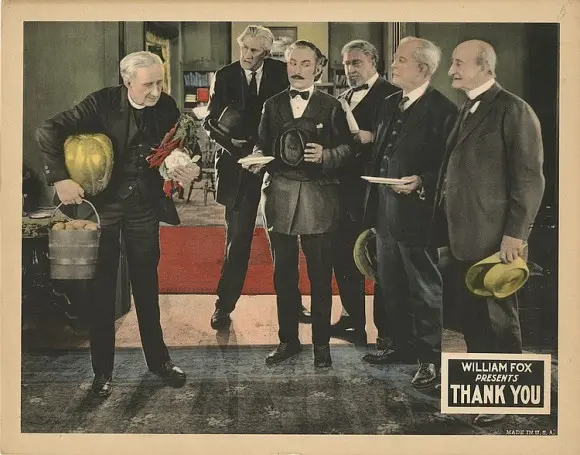
Director's Spotlight: United States
A Deep Dive into the 1925 Vision of John Ford
Peeling back the layers of John Ford's Thank You exposes the collaborative alchemy between John Ford and the 1925 creative team. Anchored by a narrative that is both personal and universal, it reinforces the idea that cinema is a medium of infinite possibilities.
In Thank You, John Ford pushes the boundaries of conventional narrative. The film's unique approach to its subject matter has sparked endless debates and interpretations among cinephiles and critics alike.
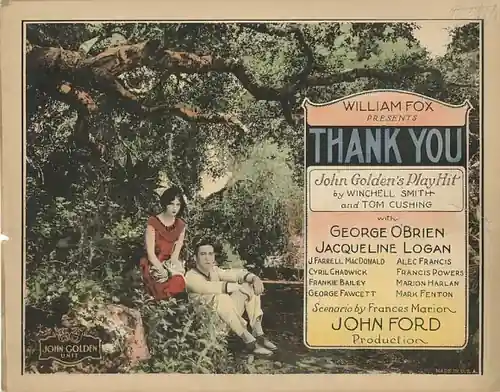
The visual language of Thank You is defined by its use of shadows and framing, a hallmark of John Ford's style. By utilizing a 1925-era palette, the film creates an immersive experience that perfectly complements its Romance themes.
| Cinematography | Deep Focus |
| Soundtrack | Orchestral |
| Editing | Slow-Burn |
| Art Direction | Brutalist |
Visualizing the convergence of John Ford's style and the core Romance narrative.
Young Kenneth Jamieson's millionaire father, fed up with his son's wild escapades, sends him to stay on a chicken farm in the small village of Dedham. On the day he arrives there pretty Diane Lee, the niece of local Rev. David Lee, arrives from Paris. A few days later Kenneth, reverting back to his wild ways, gets drunk and makes a spectacle of himself, but rather than reproving him, Rev. Lee gives him a heart-to-heart talk and gets Kenneth to turn his life around. Meanwhile, the reverend--barely able to get by on the pittance the local vestrymen pay him--asks for a raise but is denied, told that he must send Diane away before they'll even consider giving him any extra money. Soon afterward, Kenneth falls gravely ill. His father, hearing of Kenneth's condition and of his infatuation with Diane, arrives at the village to see his son and isn't ready for what he finds.
Decades after its release, Thank You remains a vital piece of the cinematic puzzle. Its influence can be seen in countless modern works, solidifying John Ford's status as a master of the craft in United States and beyond.