
DbcultAccessing Vault...
Director's Spotlight
Senior Film Conservator
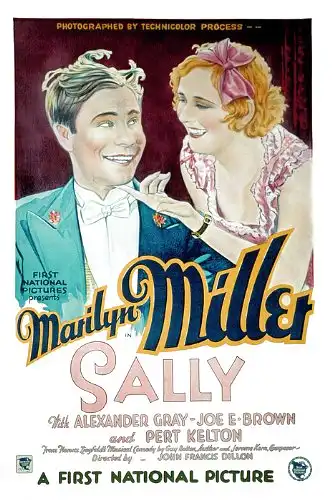
Director's Spotlight: United States
A Deep Dive into the 1929 Vision of John Francis Dillon
When we examine the cinematic landscape of United States, Sally emerges as a landmark work of the enduring legacy of John Francis Dillon's artistic contribution to the genre. Through a lens of existential fatalism and Musical tropes, it captures a specific kind of cinematic magic that is rarely replicated.
In Sally, John Francis Dillon pushes the boundaries of conventional narrative. The film's unique approach to its subject matter has sparked endless debates and interpretations among cinephiles and critics alike.

In this work, John Francis Dillon explores the intersection of Musical and United States cultural identity. The meticulous attention to detail suggests a deep-seated commitment to pushing the boundaries of the medium, ensuring that Sally remains a relevant topic of study for Musical enthusiasts.
| Cinematography | High-Contrast |
| Soundtrack | Synth-Heavy |
| Editing | Rhythmic |
| Art Direction | Naturalist |
Visualizing the convergence of John Francis Dillon's style and the core Musical narrative.
Sally was an orphan who got her name from the telephone exchange where she was abandoned as a baby. In the orphanage, she discovered the joy of dancing. Working as a waitress, she goes from job to job until she finds a job that also allows her to dance. At the restaurant, she meets Blair and they fall for each other, but Blair is engaged to Marcia. Sally is hired to impersonate a famous Russian dancer named Noskerova, but at that engagement, she is found to be a phony and discovers that Blair is engaged. Undaunted, she proceeds with her life and has her show on Broadway, but she still thinks of Blair.
Decades after its release, Sally remains a vital piece of the cinematic puzzle. Its influence can be seen in countless modern works, solidifying John Francis Dillon's status as a master of the craft in United States and beyond.