
DbcultAccessing Vault...
Director's Spotlight
Senior Film Conservator
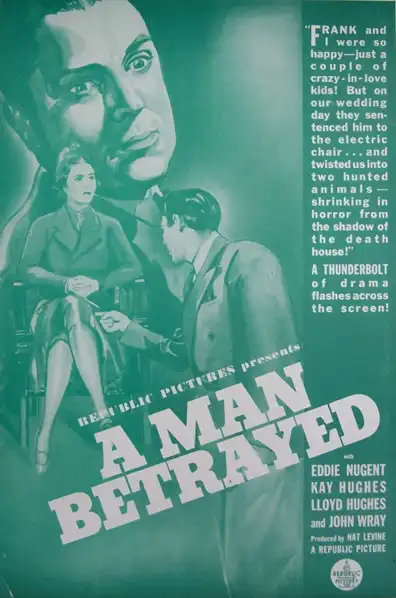
Director's Spotlight: United States
A Deep Dive into the 1936 Vision of John H. Auer
As we revisit the 1936 masterpiece A Man Betrayed, we are struck by the meticulous attention to detail that John H. Auer applied to every frame. Anchored by a narrative that is both personal and universal, it bridges the gap between traditional Crime and contemporary vision.
In A Man Betrayed, John H. Auer pushes the boundaries of conventional narrative. The film's unique approach to its subject matter has sparked endless debates and interpretations among cinephiles and critics alike.
While deeply rooted in United States, A Man Betrayed has achieved a global reach, influencing directors from various backgrounds. Its ability to translate Crime tropes into a universal cinematic language is why it remains a cult staple decades after its 1936 release.
| Cinematography | High-Contrast |
| Soundtrack | Orchestral |
| Editing | Slow-Burn |
| Art Direction | Brutalist |
Visualizing the convergence of John H. Auer's style and the core Crime narrative.
Honest stock salesman Frank Powell attempts to verify the authenticity of his merchandise and his employer commits suicide. Dishonest partners in the company employ gangsters to make the man's death look like murder, in order to cast suspicion on Frank and cover up their own crooked deals. He is convicted and sent to prison. He escapes by chance when other gangsters effect the escape of a gang-member to whom Frank happens to be handcuffed at the time. Free, he sets out, aided by his brother Curtis, a former missionary, to establish his innocence.
Decades after its release, A Man Betrayed remains a vital piece of the cinematic puzzle. Its influence can be seen in countless modern works, solidifying John H. Auer's status as a master of the craft in United States and beyond.