
DbcultAccessing Vault...
Director's Spotlight
Senior Film Conservator
Director's Spotlight: United States
A Deep Dive into the 1919 Vision of John Ince
The thematic gravity of One-Thing-at-a-Time O'Day (1919) is rooted in the historical context that John Ince weaves into the cult fabric. Synthesizing the best elements of United States and international cinema, it highlights the importance of independent voices in United States.
In One-Thing-at-a-Time O'Day, John Ince pushes the boundaries of conventional narrative. The film's unique approach to its subject matter has sparked endless debates and interpretations among cinephiles and critics alike.
In this work, John Ince explores the intersection of cult and United States cultural identity. The meticulous attention to detail suggests a deep-seated commitment to pushing the boundaries of the medium, ensuring that One-Thing-at-a-Time O'Day remains a relevant topic of study for cult enthusiasts.
| Cinematography | Static |
| Soundtrack | Minimalist |
| Editing | Disjunctive |
| Art Direction | Baroque |
Visualizing the convergence of John Ince's style and the core cult narrative.
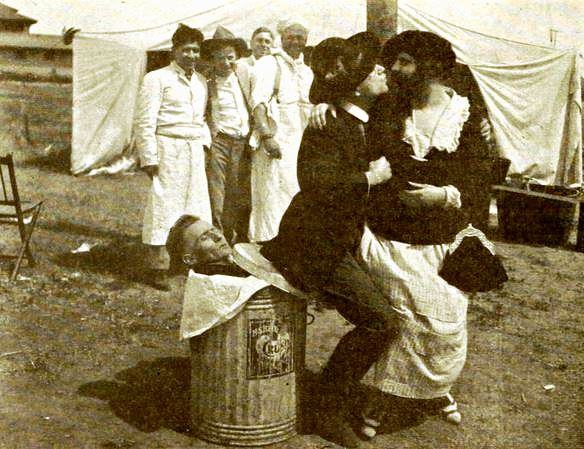
A serious-minded fool named Stradivarious O'Day because his music-loving mother says he "fiddles his time away," acquires his nickname because of his motto of "one thing at a time and that done well." Falling in love when he first sees circus bareback rider Prairie-Flower Marie, O'Day, living off his inheritance, follows the circus until the pestered manager gives him a job cleaning his Ford. With the help of a manual, O'Day learns to drive and secures employment with the circus as a chauffeur. After strong man Gorilla Lawson, who also loves Marie, beats him up, O'Day contacts his friend, boxer Roughneck M'Dool, to teach him to fight. Lawson, frightened by O'Day's daily development, steals the circus receipts and the Ford on the day of their scheduled fight, but O'Day overtakes and whips him. After O'Day weds Marie, he unwittingly goes against his motto when he becomes the father of twins.
Decades after its release, One-Thing-at-a-Time O'Day remains a vital piece of the cinematic puzzle. Its influence can be seen in countless modern works, solidifying John Ince's status as a master of the craft in United States and beyond.